Alexandria's founded by Alexander

Alexandria's founded by Alexander the Great (by year BC): 334 Alexandria in Troia (Turkey) - 333 Alexandria at Issus/Alexandrette (Iskenderun, Turkey) - 332 Alexandria of Caria/by the Latmos (Alinda, Turkey) - 331 Alexandria Mygdoniae - 331 Alexandria (Egypt) - 330 Alexandria Ariana (Herat, Afghanistan) - 330 Alexandria of the Prophthasia/in Dragiana/Phrada (Farah, Afghanistan) - 330 Alexandria in Arachosia (Kandahar, Afghanistan) - 330 Alexandria in the Caucasus (Begram, Afghanistan) - 329 Alexandria of the Paropanisades (Ghazni, Afghanistan) - 329 Alexandria Eschate or Ultima (Khodjend, Tajikistan) - 329 Alexandria on the Oxus (Termez, Afghanistan) - 328 Alexandria in Margiana (Merv, Turkmenistan) - 326 Alexandria Nicaea (on the Hydaspes, India) - 326 Alexandria Bucephala (on the Hydaspes, India) - 325 Alexandria Sogdia - 325 Alexandria Oreitide - 325 Alexandria in Opiene / Alexandria on the Indus (confluence of Indus & Acesines, India) - 325 Alexandria Rambacia (Bela, Pakistan) - 325 Alexandria Xylinepolis (Patala, India) - 325 Alexandria in Carminia (Gulashkird, Iran) - 324 Alexandria-on-the-Tigris/Antiochia-in-Susiana/Charax (Spasinou Charax on the Tigris, Iraq) - ?Alexandria of Carmahle? (Kahnu)
Showing posts with label Cleopatra (wife of Philip II). Show all posts

Monday, July 28, 2025

Cynane buried next to her father, Philip II

Cynane was Alexander’s half-sister, born around 357 BC. Her mother was Audata from Illyria (see: The many wives of Philip II of Macedonia), whom King Philip had married to secure his expanding kingdom. 

Philip gave Cynane in marriage to Amyntas, who was the legal successor to the throne of Macedonia after his father, King Perdiccas III of Macedonia, died in combat in 359 BC. As Amyntas was only a child, Philip, Perdiccas' younger brother, became his tutor and regent. Later that year, Philip was elected king instead.

After Philip's murder in 336 BC, Amyntas could have taken his chances, but he did not, for whatever reason. The newly elected King Alexander, however, did not hesitate and had Amyntas killed. He could have suspected that Cynane would manipulate her husband to gain power. Cynane was left a widow, raising her daughter Adea alone. Not for long, though.

When Alexander made his way to Pelium in 335 BC, he faced a threatening revolt of the Illyrians, and Langaros, King of the Agrianes, came to his rescue. In recognition of his assistance, Alexander invited Langaros to Pella, offering his half-sister Cynane in marriage. Before this wedding could materialize, Langaros fell ill and died (see: The short-lived appearance of King Langaros).  

Cynane stayed in Macedonia as Alexander left for Asia. Having been raised by her mother in the Illyrian tradition as a warrior, equal to any man, she now instilled the same values in her daughter. 

Upon Alexander’s death, Cynane saw her chances, not for herself but for Adea. She mobilized her troops and led her daughter and her army to Babylon to secure their future by arranging the marriage of Adea with Alexander’s successor. 

As the daughter of Philip II and Alexander’s half-sister, Cynane enjoyed the loyalty of the Macedonian army, despite General Perdiccas disagreement. The general tried to stop her in every possible way and sent Alcetus, who killed Cynane before she could speak. This assassination did not sit well with the Macedonian army, who revolted and demanded that Adea, Alexander’s niece, marry Alexander’s half-brother, the simple-minded ArrhidaeusArrhidaeus, who was the only available bloodline, would rule as King Philip III, and Adea would become Queen Eurydice II. She was the power behind Philip III, which was not to the liking of Queen Olympias. She had Philip III killed in 317 BC and Eurydice II imprisoned and forced her to commit suicide. 

This long introduction brings me to the tomb of Philip II and the adjacent tomb of a woman in Vergina. Since its discovery in 1977 when Manolis Andronicos attributed the tomb to Philip II and the remains in the smaller room to his seventh and last wife, Cleopatra, many arguments have erupted, presenting different theories. 
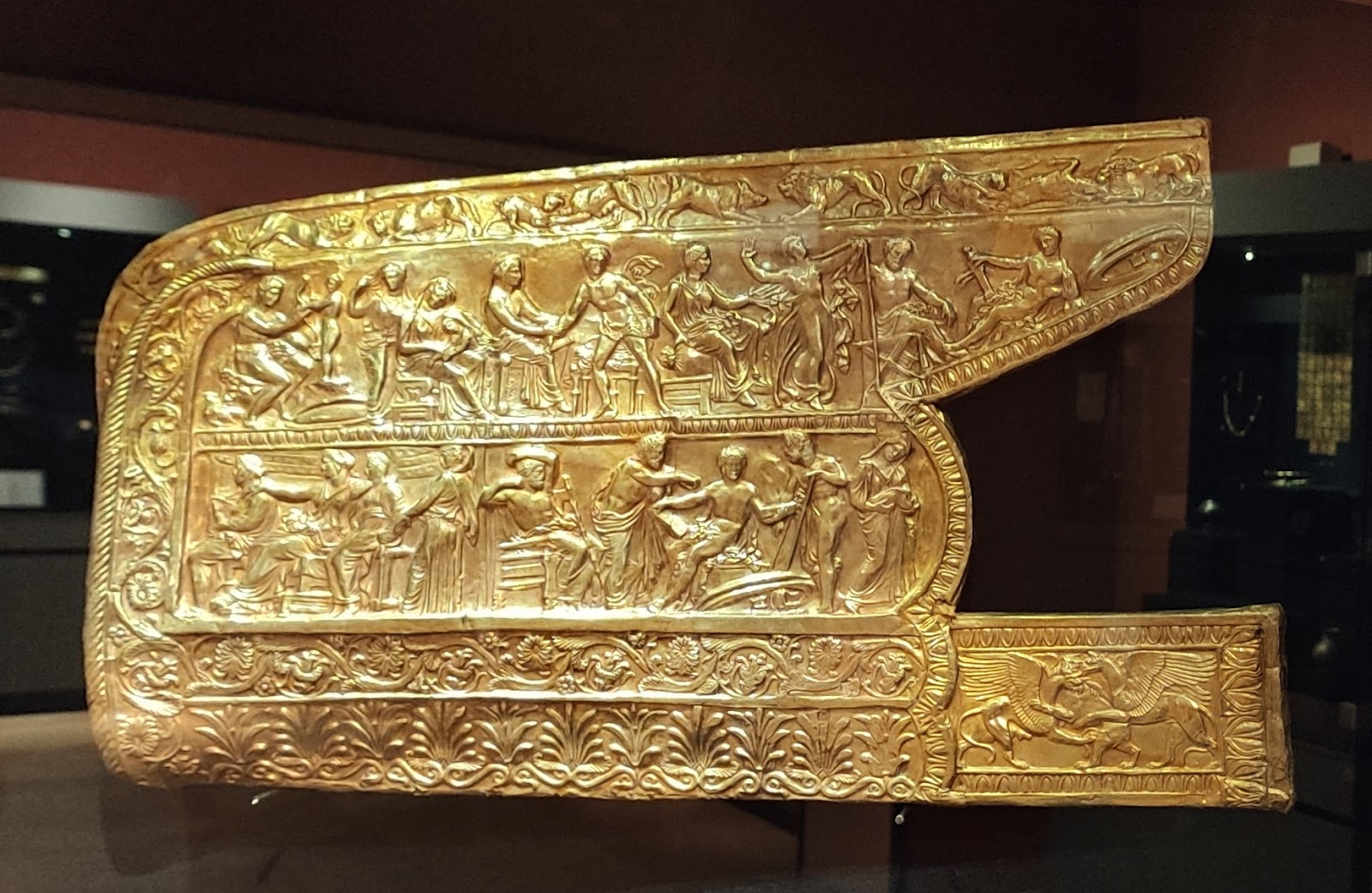
Recently, I watched a presentation on the History Channel*, about the gold quiver or goritos found in this tomb. Scholars agree that it is Scythian and not Macedonian, made between 900 and 200 BC. Next, the question arose whether it had belonged to Philip or to the woman. If it was the woman’s, who was she, and could she be a descendant of the fiercest Scythian female warriors, the mythical Amazons? 

The breakthrough occurred when the female bones and pelvis from the smaller room were analyzed. It is known that a woman’s pelvis changes during life, and it could be determined that this example was between 30 and 35 years old. 

Adea/Eurydice was only 20 years old when she had to take her life. She is not a candidate to be interred in Vergina. This conclusion automatically excludes earlier debates presenting Philip Arrhidaeus as the main occupant. 

The only remaining person obviously is Cynane, Alexander’s half-sister, who was 34 years old when she was murdered on the orders of General Perdiccas. 

It was also established that the two chambers of the Vergina Tomb were not built at the same time. Since Cynane died 13 years after her father, it is entirely plausible that her tomb was added next to her father’s at a later date. 

The program concluded with an extra note regarding the Scythian goritos (that was worn around the waist). After examining the DNA of the remains found in the Scythian kurgans, the scholars concluded that not all warriors were men, as 1/3 of the burial sites were built for women. 

Cynane must have been quite a character, raised as a warrior and a match to any man. No wonder the Macedonian troops were horrified when she was murdered in cold blood. It is quite remarkable that she lived one year longer than Alexander. Whoever arranged for her to be buried next to Philip was well aware of her courage and battle spirit. Maybe her father had been attracted to Audata for that same reason, who knows?

*2023 Strangest Things on History Channel
[Picture of Cynane's larnax and Facade of Philip's tomb are from Wikipedia; Goritos picture from this link Wikipedia]

Thursday, January 14, 2016

Philip’s tomb at Vergina, is it or is it not?

How often are we going to solve and refute the many theories that circulate about the owner of the bones contained inside the gold larnax at Vergina? Can we make sure they are those of Philip II of Macedonia, the father of Alexander the Great, or not?

The latest conclusions were drawn in May 2015 but as explained in my article Inconclusive Analysis of Philip’s Tomb at Vergina they are far from being watertight. Before that, in 2009, Eugene Borza, Professor Emeritus of Ancient History, The Pennsylvania State University, wanted to prove that Tomb II was that of Alexander the Great (see: Questioning the Tomb of King Philip II, father of Alexander the Great), so what’s new?


A more recent study published in the Proceedings of the National Academy of Science in August 2015 states that Philip is to be found in Tomb I and not in Tomb II as generally accepted till now – a theory based on Philip’s leg wounds.

The tumulus of Vergina contains in fact three Tombs, but only two are of particular interest. Tomb I contains the non-cremated remains of a man, a woman, and those of a newborn baby. Tomb II contains the remains of a man and a woman inside two gold larnakes with an array of armory and grave goods. Because of this content, but also the fact that according to history Philip had been cremated as common in Macedonia, led to conclude that this tomb was Philip’s.

Researchers now have done a bone examination of both tombs. In Tomb I it has been established that the baby was 41-44 weeks old, either newborn or still unborn; the woman was around 18 years old, being the age given by historians for Cleopatra, Philip’s last wife; the male skeleton was judged to belong to a 45 old (which matches Philip’s age) who suffered from a severe knee wound received three years before his death. This latest information can be tied to Philip’s last injury during his campaign against the Scythians. The leg bones contained in this tomb show a stiffened knee joint, knee ankylosis as we would diagnose today, together with a bone hole caused by a lance, which matches King Philip’s lameness.

The skeleton in Tomb II bears no leg injury and is therefore attributed to Philip II Arrhideus, Alexander’s half-brother and successor as co-king together with Alexander IV, the son of Alexander the Great and Roxane born after Alexander’s death.

The above story has appeared in the International Business Times but does unfortunately not tell us how far the remains in Tomb II do indeed match up with Philip III Arrhideus and does not explain the presence of a long and a short greave, for instance. It only mentions that the skull found there does not belong to King Philip (a rather obvious remark in the entire context).

The article is based on an interview with Antonis Bartsiokas, Democritus University of Thracia, Komotini, who has been working on the identification of the Vergina tombs for over 15 years. He seems to be an authority, so why do I still have my doubts? I find it a rather shortcut to state that “Philip was assassinated with his wife Cleopatra and newborn child” since Cleopatra and her child were murdered by Olympias after her husband had been killed, although we don’t know how long afterward but certainly not together with him. Another point that raises questions is that he is accepting that Philip II was wounded during his fight against the Scythians but why does it take priority over his burial according to Macedonian rites where the body was cremated. Alexander may have been in a hurry to bury his father but certainly not to the extent to go against old Macedonian tradition – I’m sure the entire army would have revolted. So, how conclusive can such an analysis be?

Friday, June 19, 2015

Inconclusive analysis of Philip’s Tomb at Vergina

No more speculations, no more discussions, the remains inside the gold larnax that was retrieved from the tomb of Vergina in the 1970s by Manolis Andronicos are indeed those belonging to King Philip II, the father of Alexander the Great. A scientific bone analysis published in the International Journal of Osteoarchaeology has confirmed this theory based on computed tomography (CT) and X-ray fluorescence (XRF). During the scientific research, experts also found scars on the bones that match Philip’s battle wounds. They used no less than 4,500 digital photographs and scans, scrutinizing every single bone, each tooth, and each and every other fragment that was locked inside the larnax.


As positive as this may sound, there seem, however, to be certain restrictions, as from further investigations I read that “sharp trauma to one of the bones of his palm is actually the only injury the researchers found that lines up with historical accounts”. The bones belong to a male aged about 40-50 years, and wear and tear due to extensive horseback riding has also been established. But for now, this only means that it is reasonable but not conclusive to confirm that the remains found in the Tomb ascribed to Philip II are his. How to make headlines, I wonder!

I was hoping that at last, this great king, the one who put Macedonia on the map, might rest in peace, but we are not there yet.

In the same article, a female skeleton buried in the same tomb has been analyzed. This is being referred to as belonging to a Scythian princess, Philip’s seventh wife. This statement left me puzzled when I read about this a few months ago, for I had never heard of such a marriage (see: The many wives of Philip II); Philip's seventh wife was Cleopatra, whom he had married shortly before being murdered. Yet, according to an article published by Mediterraneo Antiguo it seems that as early as 1978, NGL Hammond had suggested that this woman could be the daughter of the Scythian King Ateas. She had injured her left leg and the short greave found in the tomb might just have been hers and not Philip’s. This might also explain the presence of the Scythian gorytos found in the antechamber.

It just looks as if we are back to square one. Only time will tell, as usual!

Thursday, January 1, 2015

Looking for Illyrian remains in Albania

Albania sounds to be the right place to find traces of Illyria, if any are to be found. 

We know that Alexander spent time in Illyria, but not where. There were no cities of importance, but people scattered around in small tribes, fighting among themselves and invading Macedonia on a regular basis in search of fertile land. The borders of Illyria were not clearly drawn. Those of today's Albania are but don't match either with old Illyria, although roughly in its center, nor with Epirus in the south, where it is shared with Greece.

Honestly, I don't know what proof of Illyria I can find or will come across, for they had no alphabet, cities, or art of their own – at least to my knowledge. Albania is not making things easier either, since the country has been locked away for half a century with a totalitarian regime that can only be compared to North Korea. It is now trying to emerge in the hope of meeting Western standards, although the Albanians have only scant notions of what that means, especially those living in the eastern mountains, where time has come to a standstill. I am on a general tour of one week, which is supposed to touch base with the key periods of Albania's history, the Macedonians and Greeks, the Romans and Byzantines, the Ottomans and Skanderberg (National Albanian Awakening), the Slavs, King Zog with WW1, the many foreign rulers during WW2, and the authoritarian communist regime under Enver Hoxha. An extremely long and varied timeline, although I am interested only in the very first centuries. Whatever I'll learn about the Illyrians themselves and the Macedonian occupation is a welcome bonus.

In a previous blog about the Illyrians (see: A closer look at Illyria), I summarized the roles played by King Philip II of Macedonia and his son, Alexander the Great, in putting Illyria on the map. After becoming king of Macedonia, Philip prioritized signing a treaty with the Illyrians, including his marriage to Audata, King Bardylis' granddaughter. This was only a way to win time because one year later, Philip marched north. He met the Illyrian army near Lake Ohrid, where he was victorious, and demanded that the Illyrians pull out of Upper Macedonia north to Lake Lychnitis. Alexander, in turn, sought refuge in Illyria after the brawl during his father's wedding to Cleopatra, Attalus' niece, in 337 BC. Attalus brought a toast to a lawful successor of Macedonia, implying that Alexander was a bastard. We know how Alexander reacted, especially since his father took Attalus' side. This was when Alexander left for Illyria, taking his mother, Olympias, to the safety of her brother's court in Epirus.

Peace with Illyria lasted while it lasted, for as soon as they heard that King Philip was assassinated in 336 BC, they felt free from any obligation towards Macedonia. Alexander could not afford to have these troublesome tribes raiding his northern borders while preparing to cross to Asia. So, as soon as the most urgent matters were settled in Pella, Alexander took his army north and not only defeated the Illyrians but also mopped up all the resistance. Ultimately, the Illyrians became faithful allies and fought at his side throughout his Asian campaign.

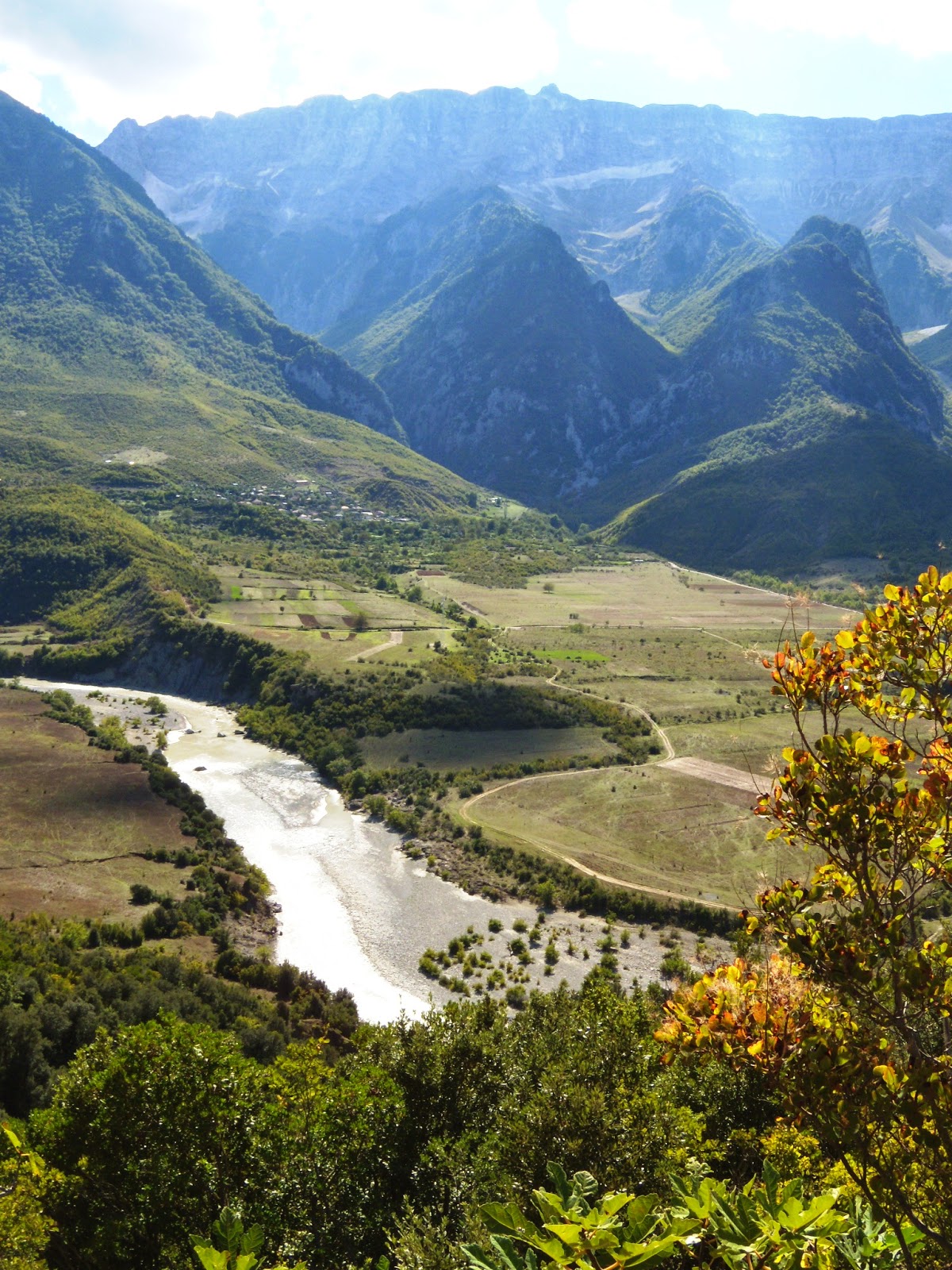
I am curious to see the landscape Alexander crossed to understand where he may have been during his self-imposed exile. I will soon be rewarded when we drive over the most horrible road from Pogradec to Gjirokastra through the mountainous region of southeastern Albania.

Pogradec lies on the crossroad linking Tirana, the Albanian capital, to Elbasan and Korce and on the southern bank of Lake Ohrid, where King Philip made history. This was an essential stop along the Via Egnatia in antiquity that connected Byzantium to Rome. Today, Lake Ohrid is shared between Albania and FYROM (meanwhile renamed the Republic of Northern Macedonia). It is one of the three geological wonders in the world, harboring endemic species that cover the entire food chain. As we drive down to the shores of the lake, the views are superb, and I am impressed by the sheer size of the lake; it must have looked like a sea to people in antiquity. Unlike the more inland parts, our stop in Ohrid has a very Mediterranean feeling. But Alexander has been remembered in these parts, for I find restaurants and wine carrying the name Aleksandrija.

The next day we pick up the main road from Korca south to Gjirokastra, but our maximum speed on this bumpy, degraded, deteriorated, and unmaintained road is 25 km/hour. It takes us all day to get there, but nobody is complaining, for the landscape is absolutely breathtaking! There are no cities or towns, hardly an occasional cluster of houses, recent constructions next to dilapidated shacks that may be stables or housing, who knows. Small gardens, a few fruit trees, a couple of cows, and donkeys are all that people have to live on. I am told that in winter, the snow is two meters deep in these parts, making it impossible for cars or buses to get through. Even today, there is no regular bus service in those parts – how isolated can one live? Was it like this in Alexander's days, I wonder. It cannot have been much better, if any, for the land and weather are still what it was. No wonder the Illyrians were envious of the fertile plains of Lower Macedonia! Overall, the landscape is green with a wide assortment of trees and low bushes between patches of rocky grassland framed with high, barren peaks. Occasionally, a river or stream meanders through the valleys, reflecting the sunlight or threatening clouds. The productive patches of land along those waterways are thriftily cultivated, a pleasant sign in this otherwise austere land.

Then we reach Gjirokastra, whose Greek name is Argyropolis (meaning silver castle), which must have been a fortified place in Epirus (yes, we are in Epirus here!). The oldest finds so far are the city walls from the 3rd century AD. The remains of today's citadel, built between the 6th and 12th centuries, still command the otherwise Ottoman city.
It is funny when I come across a Rruga Antipatrea, which is the old name for Berat, and most probably, this street and city were named after Antipater. A restaurant proudly shows off the name Antigoni. What a shame that there are no written records in Illyria and that the Macedonians or the Greeks didn't bother to write about them.

The most rewarding moments of my tour were those when I faced Illyrian artifacts in the local museums. In Apollonia, I saw my first Illyrian shield from the 4th century BC, which looked so closely like a Macedonian one. I was told that the difference was to be found in its curving; whether that is true or not, I don't know, for it had the same semi-circles and the Medusa head in the center, complete with shiny inlaid eyes that intensified her glance. Another shield was shown at the Skanderberg Museum, with the same semi-circles but carrying the Macedonian star in its center, with an Illyrian helmet and some arrows and spearheads. More helmets were exhibited at the Archaeological Museum of Tirana, where a mold for an Illyrian shield was also displayed.


Yet, the most unexpected highlights are the Royal Tombs of Selca e Poshtme, a place in the middle of nowhere with no decent road leading to it. This is supposedly the ancient city of Pelium, perched high on an acropolis that overlooks the river Shkumbin. In the middle of the 4th century BC, the Illyrian town was protected by a wall, and its life was intensive. They made pottery out of grey clay imitating Greek shapes and decorations, created metal and bronze tools, and traded their goods over the roads along the river, which would later become the Via Egnatia. It was the residence of the Illyrian kings. However, excavations are still in an early stage, and Pelium's role is mainly based on the coins found in cities like Apollonia and Dyrrhachion (modern Dürres). The main discovery is four royal tombs right under the cliff of the Acropolis; definitely Illyrian but, at first glance, very Macedonian. More about these great tombs in my next post, Alexander's psychological warfare in Pelium, Illyria.


Last but not least, I should focus on the route followed by the Via Egnatia, although I have yet to come across any visible pavement like in Philippi, Greece, for instance. From Ohrid, it ran through Elbasan, where it split into two. One arm connected directly to Dyrrhachion (Dürres), and another crossed Apollonia and Antipatrea (Berat) to end at Dyrrhachion on the Adriatic coast. From here, ships ferried people and goods to Brindisi on the Italian side. I regret that I have not seen a remnant of this famous road, but have only been pointed to the line it followed through the cities. Maybe next time?

Wednesday, June 25, 2014

Pella, the birthplace of Alexander the Great

Pella became the capital of Macedonia in the early 4th century BC. The choice for the location is, as always, made with great care. Situated at the mouth of the Axios River, the city had direct access to the sea, although the harbor has not yet been located. That is not surprising, for today’s Pella lies 25 km inland, as over the past two thousand years, the river has silted up and has covered the remains of the settlement. The land was fertile, however, sloping up gently towards the mountains, which are now part of the Republic of Macedonia. Standing here, it is not difficult to mentally erase the houses and roads and imagine what it may have looked like in Alexander’s days with fields of barley, wheat, and oats, or rows of olive trees followed by fruit trees, mainly peaches and pomegranates – a garden of Eden.

Any first-time visitor to Pella will be struck by the American layout of the street plan, all house blocks of the same size, and all streets crossing each other at a right angle. The east-west roads were nine meters wide, while the north-south streets were a mere six meters. A wider ornamental road, 15 meters wide, ran through the city center to the Agora. Pella knew an excellent water supply, and a close look would reveal the underlying functional system, with at the crossroad a special earthen urn that collected the dirt and could easily be removed for cleaning. The city counted many wells and fountains, combined with an efficient drainage system.

Excavations are ongoing, with the ups and downs that typically go hand in hand with finances. When I was here the first time in 1973, there were only a few pebble mosaic floors amidst a handful of slender Ionic columns; the most precious mosaics leaned against a shack covered with a piece of roofing. Since then, the excavated surface has expanded steadily, and a first small museum housed the earlier exposed mosaics together with marble and terracotta statues, among which a head of Alexander as a young prince and a statue representing him as Pan. Most recently, a new museum has been built where many more artifacts have joined the collection, now exhibited in chronological order.

The true eye-catchers at the Archaeological Museum of Pella are, of course, the pebble mosaics: a Lion Hunt featuring Alexander and Craterus; Dionysus Seated on a Panther and Carrying the Thyrsus Staff; a Griffon Attacking a Deer; and a couple of centaurs. As always, I’m entirely taken by the Tanagra statuettes, among which are those of two ladies playing the lyre, a couple of playful cupids, and several heads with ladies showing all sorts of hairdos. From the potters’ quarters, there is a wide selection of pots, vases, and other vessels, very representative of their period in time. Striking are the ivory and bone elements from now perished wooden kline or couches that have partially been reconstructed. Further, several golden crowns, a wide choice of silver and gold coins, remains of a frescoed wall from the second century BC, a small marble horseman, although decapitated, still carrying a proud posture; a marble inlaid round table, etc.

The mosaics of Pella are quite unique since they are mainly made with pebbles of different sizes, ranging from white to grey to bluish-grey, collected from the nearby beach and arranged in patterns. Here and there, a touch of yellow or red is added to enhance the picture, and the contours are accentuated using bronze strips. The large mosaic of the Rape of Helena has remained in situ under a protective roof. Such dynamics with the horses in full gallop and the dashing dresses; the edges of the panel are trimmed with palmetto and acanthus motives. The next room is paved with a mosaic showing a Deer Hunt, also in full action. This house alone covers a surface of 3,000 m2. The private houses varied in size, and the rooms were arranged around a central courtyard, generally framed by colonnades. Many mosaics have been covered up with sand to protect them, an understandable precaution, but very sad to find them hidden from view.

The Agora, covering 700 m2 in the heart of Pella, underwent thorough restoration, making the layout easier to understand with the six-meter-wide surrounding Stoas that gave access to a wide array of workshops and shops selling food, pottery, jewelry, and more. On the north side, official buildings have been identified, like the Temple of Aphrodite and others supposedly serving the city’s administration. The southwestern side may have housed the archives since many seals used to secure the papyri have been retrieved. More houses were uncovered on the south side of the old main road, which now runs right through the middle of ancient Pella. It is here that the intriguing round Sanctuary of Darron has been identified, whose striking mosaic floor has been transferred to the Museum. 

The Royal Palace of Pella, where Prince Alexander grew up, is located further uphill to the north - still within reach of the city. The Palace alone covers an area of 6 ha and was divided into seven separate complexes, including, beside the living quarters, the necessary storage rooms, rooms reserved for entertainment, service rooms, and even a swimming pool and a palestra. These complexes were, of course, interconnected by corridors and staircases. The royal family must have occupied the most central part, with four large buildings around a large open courtyard. It would be interesting to figure out how close Philip’s wives lived to each other, how much space was occupied by the official administration and military management, where the many visiting delegations were lodged, which rooms the King used to receive his guests, etc. 


The Palace was supposed to open to the public in 2011, but at the last moment, it was decided to restart more archaeological work on the premises. I was not allowed inside, but I could at least walk all the way around it, taking in the view over the city of Pella and the sea beyond. Behind me, the Macedonian landscape was covered with bright spring flowers from the white chamomile and pink hollyhock to the deep red puppies and purple wild onions – an explosion of colors over the rolling hills. It felt like a homecoming, in an intoxicating excitement. The land is pleasantly green, cut through by refreshing, clear streams tumbling down from higher elevations under the blue sky filled with fleets of puffy clouds. This is truly the place where Alexander spent his youth!

Like other boys and young men his age, Alexander would have been hunting boar, foxes, and lions (who have long since gone), probably in the hills to the north. We have the abovementioned mosaic of the Lion Hunt with Craterus to illustrate the hunting parties and also the fresco above the Tomb of Philip at Aegae (modern Vergina). Hunting was a way to train for war and to develop physical and mental skills. Without his friends, Alexander would have had a rather lonely youth since his father was constantly fighting the neighboring tribes and cities in order to extend and stabilize Macedonia. The young prince grew up with the stories of his father’s campaigns that must have fueled his imagination; based on the legends of Troy, he treasured them all his life. Around age twelve, Philip invited Aristotle to teach the young prince and even found an appropriate location at the temple of the Nymphs in Mieza.  These probably were the years when Alexander learned the most in many fields, like literature, topography, biology, zoology, botany, ethics, and even meteorology – a knowledge he shared with his boyhood friends such as Hephaistion, Ptolemy, and Nearchus [see: Mieza, Alexander's schooling]. Alexander’s interest in medicine must have come from these days with Aristotle, a skill he used throughout his life to treat his sick friends.

Macedonia was not an isolated “Barbarian” country as so often stated, but the court had long been a center for culture where envoys, refugees, artists, actors, and delegates from all around the Mediterranean spent time. Alexander’s knowledge of the world extended thus far beyond his homeland, and he and his immediate neighbors must have had quite a broad insight into what was going on in other parts of the ancient world. Theopompus of Chios, who later on wrote a History of Philip, was one of the visitors. Envoys from Sparta, Thebes, Thessaly, and Phocis found their way to Pella. Athens sent several ambassadors to the capital to end the successive Sacred Wars, and we know that negotiators like Demosthenes, Aeschines, Philocrates, and Nausicles participated in these missions. More significant was the presence of Artabazus II, satrap of Hellespontine Phrygia, who revolted against Persian rule and found refuge at Philip’s court. He spent several years there with his wives and children, among which his eldest daughter Barsine. She was about seven years older than Alexander, and we know how they met again many years later when she became his mistress and even bore him a son, Heracles

When Philip appointed his 16-year-old son as Regent while he went fighting in the east, Alexander must have realized how much his father trusted him, and at the same time, he recognized him as the official heir to the throne. These feelings were stressed again two years later during the Battle of Chaironeia, where Alexander not only proved his leadership and capability in military matters at the head of the cavalry, but he also crushed the Sacred Band of Thebes, which was known to be invincible; this must have boosted his ego to an even higher level. Alexander must have felt ready to take command, not only of the army but maybe also of the kingdom. Realizing, however, that his father was “only” in his mid-forties and that he would have to wait a very long time to take over his tasks must have been hard to accept. He would have to live in the shadow of his powerful father for another twenty years at least.

Shortly afterward, some worrying situations developed. Philip married for the seventh time, this time with Cleopatra, the niece of one of his leading generals, Attalus, who, during the wedding feast, proclaimed that Macedonia would at last have a legitimate heir to the throne! Alexander’s mother was from Epirus, meaning Alexander was only half Macedonian. Alexander was enraged by Attalus’ remark and asked his father to reprimand his general. He did not, and Alexander promptly left the Macedonian court with his mother. He entrusted her to her brother’s care, Alexandros of Epirus, when he joined the Illyrians, making Philip worry about his earlier peace treaty with them. When the King sobered up, he realized that he had to recall his son, which he did through the intervention of Demaratus of Corinth, a common friend. He also had to make up with his brother-in-law to avoid a possible revolt in the neighboring Epirus. To this purpose, he offered his own daughter in marriage to his wife’s brother, meaning that Alexander’s sister was to marry her uncle. It was during this wedding feast that King Philip II of Macedonia was murdered. 

By the time Alexander celebrated his twentieth birthday, another drama unfolded at the Macedonian court. Philip was approached by Pixodarus of Caria for a marriage alliance. Philip put his eldest (half-witted) son Arrhidaeus forward to marry Ada, the younger daughter of Pixodarus. When Alexander heard the news, he felt overlooked and secretly sent the tragic actor Thettalus to renegotiate the deal, presenting himself instead of Arrhidaeus. When Philip got wind of this plot behind his back, it was his turn to be furious, for he was still King and ruler of Macedonia, not his son. As a punishment, he exiled a group of Alexander’s closest friends – among them Nearchus, Ptolemy, Harpalus, and Erigyius – and warned his son not to interfere in his plans ever again. It is known that Alexander rewarded his friends later on for their loyalty to high positions in his army. 

A few months later, the wedding of Cleopatra and Alexandros of Epirus was to be celebrated at Aegae in great pomp. This is when King Philip II was murdered. Alexander became the new king of Macedonia. This story will be tackled next under the title, Aegae, where Alexander's world changed forever.

Friday, June 14, 2013

Sailing the Wine-Dark Sea. Why the Greeks Matter by Thomas Cahill.


Quite astonishing what Thomas Cahill has to reveal in Sailing the Wine-Dark Sea. Why the Greeks Matter (ISBN 0385495544). I wish my history lessons at school had looked something like this, but maybe this knowledge is rather reserved for the advanced and intrepid readers – in all modesty! As much as Arrian’s book on the Campaigns of Alexander the Great is the key reading for everybody interested in Alexander, this book by Thomas Cahill is the one to get an overall view of our Western civilization, including an in-depth understanding of Alexander, of course.

This book is, in fact, Part Four of Cahill’s series published under the global name of “The Hinges of History”, comprising:

1. How the Irish saved civilization – The untold story of Ireland’s heroic role from the fall of Rome to the rise of Medieval Europe

2. The gifts of the Jews - How a tribe of desert nomads changed the way everyone thinks and feels

3. Desire of the everlasting hills - The world before and after Jesus

4. Sailing the wine-dark sea - Why the Greeks matter.

5. 6. 7. Are still under construction.

So many aspects of Greek life are being treated here that I can only mention a handful of the most striking or pertinent elements, like, for instance, Herodotus’ remark that “No one is so foolish as to prefer war to peace: in peace children bury their fathers, while in war fathers bury their children”. Nothing new under the sun, you’ll say, as it applies to today’s circumstances as it did thousands of years ago.

One aspect that is being examined is that for the first time in history, the Greeks invented an alphabet containing vowels, meaning that reading was no longer a gamble, as opposed to the old Phoenician, Persian, and even Arab words that had no vowels. This newly written Greek language was so clear that even women (!), children, and slaves could learn to read and write. The “secrecy” of written language suddenly disappears, the curtain is lifted, and suddenly a whole world becomes available to everybody. Consequently, the centuries-old oral communities (not knowing writing) that needed to do things together and required much more imagination are now, thanks to the written text, replaced by individuals able to think for themselves, which in turn leads to rational analysis. All very logical, but I never thought of it …

And then there is the Iliad! Cahill states that it was a very daring enterprise for Homer to write a book that covered only the last four days of a war that lasted ten years! Yes, that is what surprised me too when I first read the Iliad,  but it is even more amazing to find that the feeling of a ten-year-long war is so much alive in the book. After Homer, we must wait several centuries for new books to appear, especially longer works and extensive writings. This is simply because it took a long time to import enough lightweight papyrus from Egypt so that the new texts could be “transported”.

Another aspect that is being highlighted is the Greeks’ thrive for competition, one that is still running through the blood of today’s population, I feel. Their need for competition arose in many different fields and not only during festivals or games. It was a way to catch the attention of the general public. This meant that one potter would take it up against an other, one stone-cutter against the other, and also the one poet against the other. The choruses singing the background tale during a theatre performance needed poets to write their parts. Athletes paid fortunes to have their prowess praised by a good poet. The burial ceremonies of important men needed poets to perform “funeral games” to sing hymns of praise that would surpass any previous ones.

And then there is the subject of music in ancient Greece. It seems they knew something called “moods”, which we in our modern Western world limit to minor (sad) and major (happy). The old Greeks seem to have known five of such moods: Doric was warlike, Phrygian expressed contentedness, Ionic sounded tempting, Eolian, and Lydian. For the ancient Greeks, to live without music meant as much as being dead – that is what Sophocles said anyway. Looking at it from that point of view, it is evident that theatre with its choruses is only a stone’s throw away.

Thomas Cahill also spent time explaining the Greek “symposia”, the event where men with the same interests met in order to philosophize and drink together. [The Greek symposion became the Latin symposium, the plural in both cases being symposia – literally “a joint drinking”]. Clearly, a happening that was not exclusively known in Macedonia, although they may have been or probably were rougher than what happened in civilized Athenian circles… These kinds of banquets were held in someone’s home, in a special room called an andron, literally “men’s room”, while the idea was more that of a men’s club from the upper class. The gentlemen were stretched on comfortable couches, wide enough to accommodate two or three guests together. They wore floral crowns  (Oliver Stone must have had a very close look to portray the banquet held in honor of Philip’s wedding with Cleopatraate from tables loaded with all kinds of food and were treated to music while wine was carried around by servants – usually teenage boys or female hetairai, literally “companions” in the style of geisha’s or call-girls. Young girls were generally kept away from these parties, at least in good society.

From the overall stories, one would expect the Greeks to eat lots of meat because meat was always used in the sacrifices to the gods, either sheep, goat, pork, or beef. Yet nothing is further from the truth since the daily meals were simply fish (including shellfish) and bread. In fact, nothing has changed much over the centuries since in ancient Greece cuisine as in those days, they appreciated artichokes fried in olive oil, or spitted fowl, fresh greens, fruit, nuts, and even fat Sicilian cheeses (if they were lucky). It all was washed down with diluted wine – the amount of water to be added was the responsibility of the host. 

On these occasions, besides the contribution of each individual guest, professional entertainers were called in to set the tone for a diverting and enjoyable evening. Soon, the guests would rise from their couches to dance through the night, arm in arm, pounding their feet in a fashion not too remote from Zorba the Greek’s dance. This is described lyrically as if “there was a soul struggling to carry away his flesh and cast itself like a meteor into the darkness”. By the way, the word “lyric” was first used by Homer because this poetry was usually sung to a lyre. 

Well, these are only a few facets of the many that Cahill is treating in his book, which is, in fact, a true and thorough analysis of the Greek way of thinking and being. Sailing the Wine-Dark Sea is composed of seven distinctive Chapters:

The Warrior – How to Fight, examining the “Iliad
The Wanderer – How to Feel, treating the “Odyssey”
The Poet – How to Party, mainly centered on the poetess Sappho
The Politician and the Playwright – How to Rule, handling politics and theater plays with Solon, Aischylos, Sophocles, Euripides, etc
The Philosopher – How to think, a scientific chapter with geniuses like Thales, Socrates, PythagorasPlato, Herodotus, Thucydides, etc
The Artist – How to see, about Greek statues, starting with male figures, to which female figures were added in a later stage
The Way they went – Graeco-Roman Meets Judeo-Christian, which evidently treats religion.

To summarize, this is the ultimate book handling all facets of the Classic Greek world – extremely captivating reading!