Alexandria's founded by Alexander

Alexandria's founded by Alexander the Great (by year BC): 334 Alexandria in Troia (Turkey) - 333 Alexandria at Issus/Alexandrette (Iskenderun, Turkey) - 332 Alexandria of Caria/by the Latmos (Alinda, Turkey) - 331 Alexandria Mygdoniae - 331 Alexandria (Egypt) - 330 Alexandria Ariana (Herat, Afghanistan) - 330 Alexandria of the Prophthasia/in Dragiana/Phrada (Farah, Afghanistan) - 330 Alexandria in Arachosia (Kandahar, Afghanistan) - 330 Alexandria in the Caucasus (Begram, Afghanistan) - 329 Alexandria of the Paropanisades (Ghazni, Afghanistan) - 329 Alexandria Eschate or Ultima (Khodjend, Tajikistan) - 329 Alexandria on the Oxus (Termez, Afghanistan) - 328 Alexandria in Margiana (Merv, Turkmenistan) - 326 Alexandria Nicaea (on the Hydaspes, India) - 326 Alexandria Bucephala (on the Hydaspes, India) - 325 Alexandria Sogdia - 325 Alexandria Oreitide - 325 Alexandria in Opiene / Alexandria on the Indus (confluence of Indus & Acesines, India) - 325 Alexandria Rambacia (Bela, Pakistan) - 325 Alexandria Xylinepolis (Patala, India) - 325 Alexandria in Carminia (Gulashkird, Iran) - 324 Alexandria-on-the-Tigris/Antiochia-in-Susiana/Charax (Spasinou Charax on the Tigris, Iraq) - ?Alexandria of Carmahle? (Kahnu)
Showing posts with label Bardylis. Show all posts

Friday, April 14, 2023

Confusion about the name of Dardanus

As a general rule, the tribes living north of ancient Macedonia were known as Illyrians (see: A closer look at Illyria) and more to the east as Thracians (see: Thracian treasures at Alexander’s northern border). Some of those tribes are mentioned by name in Alexander’s conquest of Asia. 

I previously wrote about the Paeonians (see: About the Paeonians), and I want to concentrate on the Dardanians this time. 


[Damastion coin 380-360 BC - Picture from Military Wiki-Fandom]

King Bardylis I was the founder of the Dardanian Kingdom, which corresponds to modern Kosovo. In 393 BC, he dethroned King Amyntas III of Macedonia to place one of his henchmen in his place. Macedonia’s king Perdiccas III decided to take the Dardanian-occupied territory back, but he was defeated and killed. As the newly elected king, Philip II, his brother, married Bardylis’ granddaughter, Audata (see: Start of Philip's reign - Macedonia forged by Philip II). He killed old Bardylis on the battlefield in 358 BC. 

On his return home from the Danube campaign, Alexander faced the Illyrian revolt led by Bardylis’ son, Cleitus. The king defeated Cleitus at Pelium (see: Alexander’s psychological warfare), and the Dardanians were generally absorbed by the Illyrians and are no longer mentioned in history. 

However, a very different Dardanus is known as the son of Zeus. He was the mythical founder of Dardanus or Dardania on the Hellespont. Dardanus’ grandson Tros gave his name to the Trojans, and his son Ilus founded the city of Ilium, modern Troy. King Priam, the last king of Troy, would trace his lineage back to Dardanus. A pedigree worthy of any king!

Friday, March 25, 2022

Link to Philip’s presence in Bulgaria

Little is known about Philip’s conquest of the land of the Getae in his early campaigns to stabilize Macedonia after the death of his elder brother, King Perdiccas III, in 359 BC. 


Perdiccas was killed in a battle against the invading Illyrians, after which Macedonia faced several threats to the kingdom’s security. There was also the matter of succession to the throne since the dead king’s son, Amyntas, was still a youngster. The Athenians tried to interfere, pushing forward a certain Argaeus and the Thracians, Pausanias, who already marched towards the capital city of Pella. Given all these threats, the Macedonian Assembly unexpectedly proclaimed Philip as King, and the people swore their oath of allegiance to him. 

It was a lengthy and challenging assignment for the young Philip. The most urgent threat came from the Illyrians, who had just defeated his brother. He managed some treaties which may have included his marriage to Audata, King Bardylis granddaughter. 

He then turned towards the Paeonians, whom he corrupted with gifts and generous promises to reach a peace agreement. Athens with Argaeus was another serious problem, and Philip tricked them into believing he was giving up any claim on Amphipolis by withdrawing his Macedonian soldiers. The Athenians took the bait and eventually signed another peace treaty. 

Macedonia suffered from relentless attacks on all sides, but within a year, Philip managed to end the four major threats that had led to his accession to the throne. The lightning speed of his actions paid off. Although peace was never long-lived, Philip cleverly manipulated his opponents using diplomacy, deceit, bribery, and political marriages. 

In 342/341 BC (see: Macedonia forged by Philip II – part 11), Philip successfully dislodged the Thracians in the east, occupying the cities along the Hellespont - a very sensitive area as he needed to control this inland route. Later that year, he turned northwards against the people who lived between Thracia and the Danube Valley. Their King Cothelas was quick to surrender, giving his daughter, Meda, in marriage to Philip to become his sixth wife (see: The Many Wives of Philip II). 

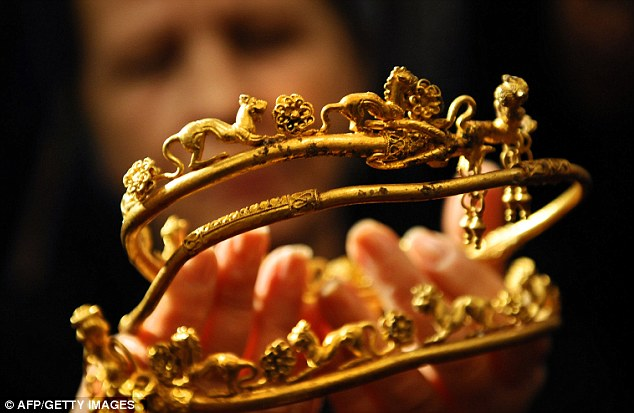
Recent excavations have located the tomb of Cothelas in northeastern Bulgaria, near the modern village of Sveshtari, roughly 400 km from the capital, Sofia. Although references to the Thracian king remain vague, the largest tomb in that burial complex may very well be his. Archaeologists have unearthed precious gold gifts, including 44 applications of female figures, 100 golden buttons, and a golden ring. The pièce de résistance is a tiara with animal motifs and a horse headpiece. Altogether, the site counts about 150 tombs all belonging to the Thracian tribe, the Getae. 

Let’s hope that further excavations will reveal more about these Thracians, of which much remains shrouded in mystery.

[Pictures from Daily Mail]

Thursday, February 2, 2017

Time to visit ancient Aiani in Upper Macedonia.

Few people have ever heard of Aiani, a lovely village close to modern Kozani, once surrounded by Kastoria, Florina, Pella, Imathia, Pieria, and Larissa in Upper Macedonia. Aiani was the capital of the kingdom of Elimeia.

The ruling king in Macedonia was Perdiccas III, who had been forced to give his younger brother Philip (the father of Alexander the Great) as a hostage to Thebes. At some time during his reign (368-359 BC), Philip returned to Macedonia, and Perdiccas gave him part of his kingdom, probably not to rule in his place but merely to rule on his behalf. According to speculations, he was entrusted with the territory of Amphaxitis, a strategic stretch of land between the Axios River and the Thermaic Gulf.

In 364 BC, Philip married his first wife, Phila, the daughter of King Derdas II of Elimeia, most probably a diplomatic alliance arranged by Perdiccas as was his right as king.

But Macedonia was faced with several threats to the kingdom’s security, and in 359 BC, the Illyrians, led by King Bardylis, envious of the fertile lands in Lower Macedonia, invaded Macedonia, killing Perdiccas and with him 4,000 brave Macedonian soldiers.  

Macedonia was on the brink of collapse and facing the problem of the king’s succession to the throne since his son, Amyntas, was still a youngster. The Athenians saw an opportunity to interfere, pushing forward a certain Argaeus and the Thracians, with a certain Pausanias already marching towards the capital city of Pella. Macedonia was in dire need of a strong leader, and given all these threats, the Macedonian Assembly proclaimed Philip as king, granting him full power, which he could not have received if functioning as regent for Amyntas. Philip, they knew, had acquired serious experience in the years he ruled part of the kingdom under the wing of his brother.

In 359 BC, Philip II was elected king, and the people of Macedonia swore their oath of allegiance. It is obvious that Upper Macedonia was at the core of Philip’s expansion, and this included Elimeia. One year into his kingship, Philip managed to unite Upper and Lower Macedonia, and he achieved it probably peacefully, consolidated no doubt by his success in crushing the Illyrians.

Presently, Aiani is in the news as the restoration of the entire city nears completion, and the site is now open to the public. The excavations have revealed a well-organized town that goes back to prehistoric times and flourished during the classical and Hellenistic eras.


Aiani was built on top of a high, imposing hill, meaning that all constructions were made upon successive stepped terraces. Archaeologists have exposed large portico structures belonging to public buildings, a water cistern, and several private houses spread over several levels because of the slope of the terrain. At the foot of the hill, extensive cemeteries and graves have been located, ranging from the late Bronze Age to the end of the 1st century BC. Besides the usual chamber tombs and cist graves, a heroon has also been found, confirming the presence of the highest social class. The wealth of the grave goods proves that Aiani maintained successful commercial and cultural relations with the rest of Greece. Contrary to what one thinks, Upper Macedonia certainly was not an isolated area.

The landscape, it must be said, is very different from what we find near Pella, Vergina, and Thessaloniki. This is a true high plateau swept by the wind, poor in agricultural land, and only fit for herding sheep and goats.

Until now, Aiani could only offer its precious Archaeological Museum to visit, which is a true treasure trove with, for instance, the oldest pieces of matt-painted pottery in black and white in the world. Some of the museum’s artifacts date back to the Mycenaean era, but most are from Greece’s archaic and Hellenistic times. This museum also holds some of the oldest samples of writing on archaic pottery, which confirms that the inhabitants wrote and spoke Greek well before the 5th century BC.

It will be interesting to see this site now that it has opened to the public!

Thursday, January 1, 2015

Looking for Illyrian remains in Albania

Albania sounds to be the right place to find traces of Illyria, if any are to be found. 

We know that Alexander spent time in Illyria, but not where. There were no cities of importance, but people scattered around in small tribes, fighting among themselves and invading Macedonia on a regular basis in search of fertile land. The borders of Illyria were not clearly drawn. Those of today's Albania are but don't match either with old Illyria, although roughly in its center, nor with Epirus in the south, where it is shared with Greece.

Honestly, I don't know what proof of Illyria I can find or will come across, for they had no alphabet, cities, or art of their own – at least to my knowledge. Albania is not making things easier either, since the country has been locked away for half a century with a totalitarian regime that can only be compared to North Korea. It is now trying to emerge in the hope of meeting Western standards, although the Albanians have only scant notions of what that means, especially those living in the eastern mountains, where time has come to a standstill. I am on a general tour of one week, which is supposed to touch base with the key periods of Albania's history, the Macedonians and Greeks, the Romans and Byzantines, the Ottomans and Skanderberg (National Albanian Awakening), the Slavs, King Zog with WW1, the many foreign rulers during WW2, and the authoritarian communist regime under Enver Hoxha. An extremely long and varied timeline, although I am interested only in the very first centuries. Whatever I'll learn about the Illyrians themselves and the Macedonian occupation is a welcome bonus.

In a previous blog about the Illyrians (see: A closer look at Illyria), I summarized the roles played by King Philip II of Macedonia and his son, Alexander the Great, in putting Illyria on the map. After becoming king of Macedonia, Philip prioritized signing a treaty with the Illyrians, including his marriage to Audata, King Bardylis' granddaughter. This was only a way to win time because one year later, Philip marched north. He met the Illyrian army near Lake Ohrid, where he was victorious, and demanded that the Illyrians pull out of Upper Macedonia north to Lake Lychnitis. Alexander, in turn, sought refuge in Illyria after the brawl during his father's wedding to Cleopatra, Attalus' niece, in 337 BC. Attalus brought a toast to a lawful successor of Macedonia, implying that Alexander was a bastard. We know how Alexander reacted, especially since his father took Attalus' side. This was when Alexander left for Illyria, taking his mother, Olympias, to the safety of her brother's court in Epirus.

Peace with Illyria lasted while it lasted, for as soon as they heard that King Philip was assassinated in 336 BC, they felt free from any obligation towards Macedonia. Alexander could not afford to have these troublesome tribes raiding his northern borders while preparing to cross to Asia. So, as soon as the most urgent matters were settled in Pella, Alexander took his army north and not only defeated the Illyrians but also mopped up all the resistance. Ultimately, the Illyrians became faithful allies and fought at his side throughout his Asian campaign.

I am curious to see the landscape Alexander crossed to understand where he may have been during his self-imposed exile. I will soon be rewarded when we drive over the most horrible road from Pogradec to Gjirokastra through the mountainous region of southeastern Albania.

Pogradec lies on the crossroad linking Tirana, the Albanian capital, to Elbasan and Korce and on the southern bank of Lake Ohrid, where King Philip made history. This was an essential stop along the Via Egnatia in antiquity that connected Byzantium to Rome. Today, Lake Ohrid is shared between Albania and FYROM (meanwhile renamed the Republic of Northern Macedonia). It is one of the three geological wonders in the world, harboring endemic species that cover the entire food chain. As we drive down to the shores of the lake, the views are superb, and I am impressed by the sheer size of the lake; it must have looked like a sea to people in antiquity. Unlike the more inland parts, our stop in Ohrid has a very Mediterranean feeling. But Alexander has been remembered in these parts, for I find restaurants and wine carrying the name Aleksandrija.
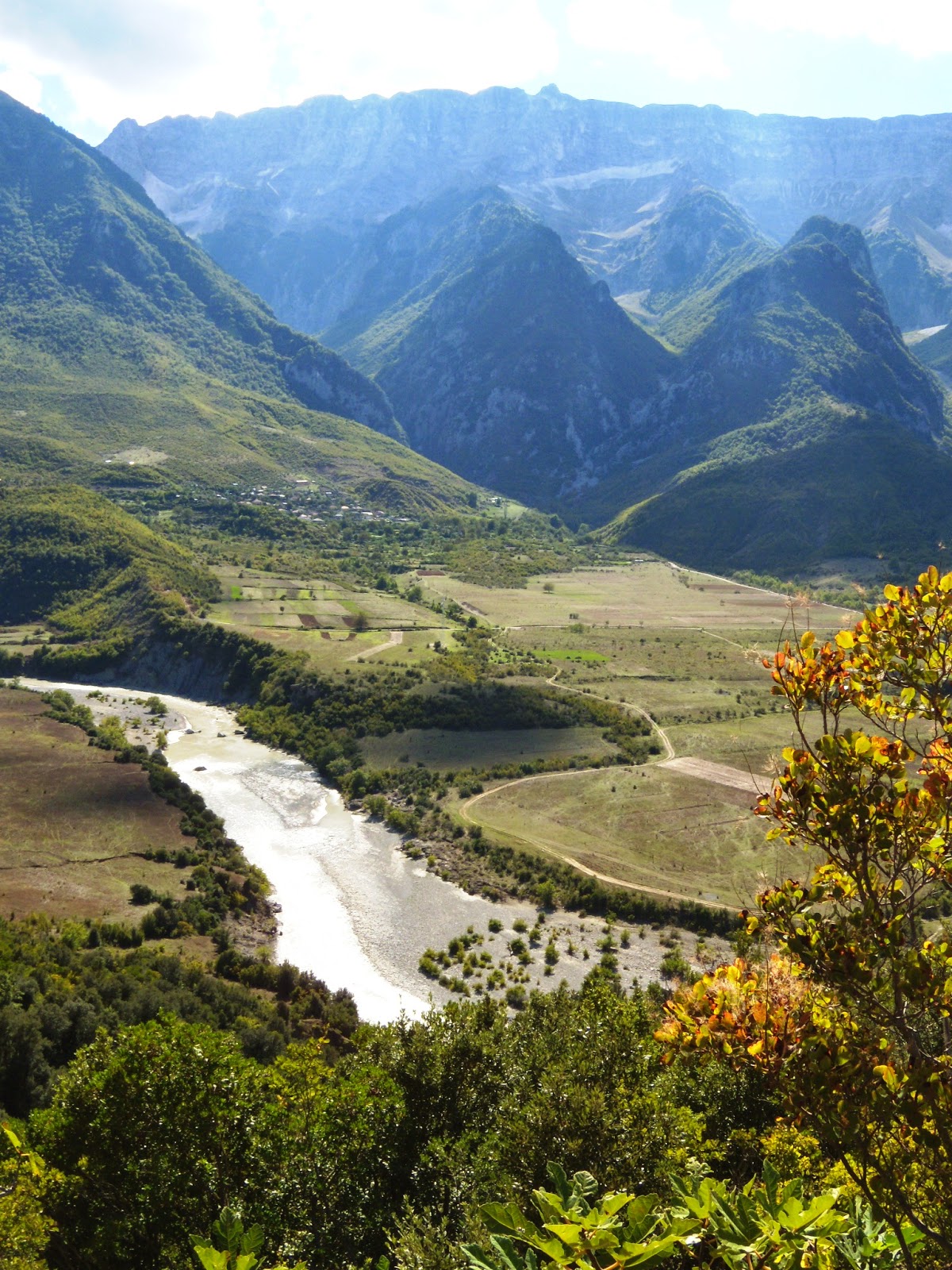
The next day we pick up the main road from Korca south to Gjirokastra, but our maximum speed on this bumpy, degraded, deteriorated, and unmaintained road is 25 km/hour. It takes us all day to get there, but nobody is complaining, for the landscape is absolutely breathtaking! There are no cities or towns, hardly an occasional cluster of houses, recent constructions next to dilapidated shacks that may be stables or housing, who knows. Small gardens, a few fruit trees, a couple of cows, and donkeys are all that people have to live on. I am told that in winter, the snow is two meters deep in these parts, making it impossible for cars or buses to get through. Even today, there is no regular bus service in those parts – how isolated can one live? Was it like this in Alexander's days, I wonder. It cannot have been much better, if any, for the land and weather are still what it was. No wonder the Illyrians were envious of the fertile plains of Lower Macedonia! Overall, the landscape is green with a wide assortment of trees and low bushes between patches of rocky grassland framed with high, barren peaks. Occasionally, a river or stream meanders through the valleys, reflecting the sunlight or threatening clouds. The productive patches of land along those waterways are thriftily cultivated, a pleasant sign in this otherwise austere land.

Then we reach Gjirokastra, whose Greek name is Argyropolis (meaning silver castle), which must have been a fortified place in Epirus (yes, we are in Epirus here!). The oldest finds so far are the city walls from the 3rd century AD. The remains of today's citadel, built between the 6th and 12th centuries, still command the otherwise Ottoman city.
It is funny when I come across a Rruga Antipatrea, which is the old name for Berat, and most probably, this street and city were named after Antipater. A restaurant proudly shows off the name Antigoni. What a shame that there are no written records in Illyria and that the Macedonians or the Greeks didn't bother to write about them.

The most rewarding moments of my tour were those when I faced Illyrian artifacts in the local museums. In Apollonia, I saw my first Illyrian shield from the 4th century BC, which looked so closely like a Macedonian one. I was told that the difference was to be found in its curving; whether that is true or not, I don't know, for it had the same semi-circles and the Medusa head in the center, complete with shiny inlaid eyes that intensified her glance. Another shield was shown at the Skanderberg Museum, with the same semi-circles but carrying the Macedonian star in its center, with an Illyrian helmet and some arrows and spearheads. More helmets were exhibited at the Archaeological Museum of Tirana, where a mold for an Illyrian shield was also displayed.


Yet, the most unexpected highlights are the Royal Tombs of Selca e Poshtme, a place in the middle of nowhere with no decent road leading to it. This is supposedly the ancient city of Pelium, perched high on an acropolis that overlooks the river Shkumbin. In the middle of the 4th century BC, the Illyrian town was protected by a wall, and its life was intensive. They made pottery out of grey clay imitating Greek shapes and decorations, created metal and bronze tools, and traded their goods over the roads along the river, which would later become the Via Egnatia. It was the residence of the Illyrian kings. However, excavations are still in an early stage, and Pelium's role is mainly based on the coins found in cities like Apollonia and Dyrrhachion (modern Dürres). The main discovery is four royal tombs right under the cliff of the Acropolis; definitely Illyrian but, at first glance, very Macedonian. More about these great tombs in my next post, Alexander's psychological warfare in Pelium, Illyria.


Last but not least, I should focus on the route followed by the Via Egnatia, although I have yet to come across any visible pavement like in Philippi, Greece, for instance. From Ohrid, it ran through Elbasan, where it split into two. One arm connected directly to Dyrrhachion (Dürres), and another crossed Apollonia and Antipatrea (Berat) to end at Dyrrhachion on the Adriatic coast. From here, ships ferried people and goods to Brindisi on the Italian side. I regret that I have not seen a remnant of this famous road, but have only been pointed to the line it followed through the cities. Maybe next time?

Monday, March 3, 2014

A closer look at Illyria

So little is known about Illyria, and so little is mentioned in history that it hardly appears on a map. Yet, it was the northwestern neighbor of Macedonia that made life difficult for Alexander and, before that, for his father, Philip II. Today, most of the northern territory is occupied by Serbia, while the south is in the hands of Albania.

[Map from Wikipedia]

The Illyrians envied the good agricultural land and lush grasslands of the Macedonian floodplains and invaded that country on a more or less regular basis. It was during such an attack in 360/359 BC by the Illyrian King Bardylis that King Perdiccas III of Macedonia was killed and, with him, 4,000 brave Macedonian soldiers. 

This incursion left the door open for further invasions, for not only could the Illyrians push all the way down to the Thermaic Gulf, but neighboring tribes like the Paeonians (in the buffer zone between Illyria and Macedonia) and the Thracians from the east could also seize this opportunity. With the death of Perdiccas III, Macedonia was exposed to more attacks by its neighbors. Besides, there was also the matter of succession to the throne since the dead king’s son, Amyntas, was still a youngster. Given all these threats, the Macedonian Assembly unexpectedly proclaimed Philip II king in 359 BC, and the people swore their oath of allegiance to him. The most urgent enemies were evidently the Illyrians, who had just defeated his brother, and it seems that King Philip II managed to sign some treaty which may have included his marriage with Audata (his second wife), King Bardylis granddaughter. One year later, with a stronger army, Philip was confident enough to march into Illyria and bluntly refused to accept the old King Bardyliss terms. Consequently, both armies met near today’s Lake Ochrid, maybe close to Heraklea Lyncestis. Philip was victorious and demanded that the Illyrians pull out of Upper Macedonia all the way north to Lake Lychnitis, including the tribes of Orestis, which until then were controlled by the Molossian King of Epirus – no small achievement for a young king.

Illyria again comes into the news in 337 BC at King Philip’s wedding to Cleopatra, the niece of Attalus. Purposely or by accident, Attalus brings a toast to a lawful successor to the Macedonian throne, which implies that he looked at Alexander as a bastard. We know how insulted Alexander felt, more so when his father sided with AttalusAlexander then leaves the court, taking his mother Olympia with him, and after placing her in the hands of her brother, the King of Epirus, he himself retires to Illyria. It is not known what he did or didn’t do there, except for spending the winter. All that is being reported is that Alexander returns to his father’s palace thanks to the diplomatic intervention of Demaratus, a mutual friend and actor.

The news of Philip’s murder in October 336 BC runs fast, and practically all his new allies start revolting. The following summer, Alexander, who meanwhile succeeded his father as king of Macedonia, marched north towards the Danube and defeated the Illyrians on his way back to subdue Thebes. Obviously, no deep ties of friendship had been forged during his earlier stay.

This long introduction brings me to recent excavations carried out at Kale-Krševica in southeastern Serbia, exposing significant remains of what appears to be a city from the late 4th/early 3rd century BC built according to the Greek model in the days of Philip and Alexander! The settlement covers an area of about five hectares and was located on an important through-road from Greece to Central Europe. Archaeology in Serbia is still in its infancy, and only about 6% of this site has been investigated so far, raising more questions than providing answers. But based on the type of architecture, the shards of pottery and amphorae, the coins and jewelry, tools, and the overall organizational system of the area, clearly establish a Greek presence that might lead to locating the city of Damastion, which is still elusive, as well as its precious silver mines mentioned by Strabo. This would, of course, boost further research. So far, it has been established that most of the settlement was located on the slopes of the hill towards the Krševica River. Several remains were uncovered, like a rampart, a larger building, undefined walls, ovens, etc.

It is interesting, however, to mention that a wide range of coins has been found with the effigy of Philip, silver drachmae showing Alexander the Great, and bronze coins of Cassander, Uranopolis, and Demetrios Poliorcetes – all of them having close ties with Macedonia in any case. On top of these specimens, one tetradrachma of early Damastion was discovered (hence the possible theory that this settlement might be the very city), and one tetradrachma of Aduleon, King of Paeonia.

Yet one of the greatest discoveries so far is the arched vault used for water storage and supply, a highly sophisticated and modern installation for its time. It shows that because of the rising water level by the end of the 4th century BC, the entire appearance and function of the original structure had to be adapted, resulting in this 10-meter-long and 6-meter-wide cistern, built from large ashlars to a height of at least six meters. The fact is that it must have held enough water for a population of several thousand. A more intensive investigation had to be abandoned, however, as archaeologists were seriously hampered by the high water table, and the cistern has been buried again pending more advanced technologies.

Well, this is just a tiny corner of Illyria that has surfaced lately. Still, it would be extremely interesting to see these excavations and others bring proof of closer contact with Macedonia from the days of King Philip II and Alexander the Great.

[Last two pictures from Kale-Krševica]

Tuesday, July 26, 2011

King Philip, one year later - Macedonia forged by Philip II - 3

King Philip, one year later (358 BC)

But, returning to 358 BC after one full year of kingship, Philip had to secure his border with the Paeonians again and trounced them. As a result, Paeonia became a sort of buffer zone between Macedonia and the tribes of the Danube to the north, which was the trade route up the Axios Valley and beyond. Philip’s army now numbered 10,000 infantry and 600 cavalry, no small achievement if you consider that only a year or two earlier, the Illyrians had defeated nearly the entire Macedonian army. He was confident about marching into Illyria and bluntly refused to accept old King Bardylis terms. Both armies met near today’s Lake Ochrid, maybe close to the town of Heraklea Lyncestis, and by the end of the day, the Macedonians had killed 7,000 Illyrian soldiers.


Philip seemed to have it all planned. He demanded that the Illyrians pull out of Upper Macedonia north to Lake Lychnitis, including the tribes of Orestis, which until now were controlled by the Molossian King of Epirus. This way, he had an open route into Epirus to the south and Orestis in the east. A surprising fact is that Parmenion, one of the Paeonian chieftains, was made a general soon after coming over to Philip’s side – an interesting background for this man who served both Philip and Alexander for many years. At this stage, Philip started training recruits from these newly conquered territories, the non-nobles as infantrymen and the nobles as cavalry. This practice stayed in place far into our 20th century!

This latest victory also meant that Macedonia virtually doubled in size, that the size of Philip’s army increased substantially in only one year, and that Upper and Lower Macedonia were united as never before. Philip, still married to the Illyrian princess Audata, found it wise to change her name to Eurydice to mask her origin. Their daughter Cynane later married Amyntas, the original heir to the Macedonian throne.

Let us switch our attention to the southern borders with Thessaly and two of its cities in particular, Pherae, with its harbor, Pagasae, controlling the coastal states, and Larissa, which controls the inland states. Strangely enough, both cities were bitter enemies. It so happened that Larissa turned to the king for an alliance against Pherae. Philip agreed, be it for his own reasons, i.e., to incorporate the expert Thessalian cavalry into his new army (estimated to be 3-6,000) and to consolidate Macedonia’s southern borders. This alliance was cemented by Philip’s (third) marriage to Philinna from Larissa. She was to bear him a son, Arrhidaeus, the following year.

After these events in 358-357 BC, Philip planned to include Epirus to consolidate his borders. Three large tribes dominated that country: the Thesprotians, the Chaonians, and the Molossians, who spoke a kind of Greek dialect and were the most powerful and prosperous. Since Epirus had also suffered from the Illyrians, a treaty with Philip was relatively easy, and it was sealed by his marriage to Princess Olympias, Philip’s fourth wife. So in 357 BC, Philip’s borders were mainly secure, but there were still two significant enemies to deal with: Athens and the Chalcidian League, who, luckily, were not on friendly terms with each other!

The Chalcidian League had a powerful army, counting 10,000 infantrymen and no less than 1,000 cavalry. We should remember that the Chalcidice owed its economic importance to the mines of the Crenides. The Athenians, meanwhile, had established settlements at Potidaea (on the neck of the Kassandra peninsula), close to Olynthus, and had captured Torone at the tip of the middle finger of the Chalcidice. And, of course, they still had an eye on Amphipolis, a most important crossing on the trading route with Thrace, including the rich mines of Crenides, the waterway to the Strymon River, and the Danube beyond. To send help to Amphipolis, Athens needed a nearby base for their fleet, and it eventually found one on the island of Thasos.

Philip’s attack on Amphipolis was quickly settled, and the city capitulated in the late summer of 357 BC. He also attacked Athens’ ally Pydna, which promptly fell to him. As a reminder, we should not forget that Philip was only 26 years old then.

Tensions between Philip and Athens ran high at this point, and both parties sought an alliance with Olynthus because of the forces it could muster. Olynthus apparently was blinded by Philip’s promises, and a treaty was made in the winter of 357-356 BC. Copies were set up in Delphi, at the Temple of Zeus in Olympia, in Dion, and at the Temple of Artemis in Olynthus. As a consequence, Philip besieged Potidaea and occupied the city.


He had no time to take a break, for now, the king of eastern Thracia besieged the strategic and precious city of Crenides. It was only about 40 miles east of Amphipolis, right above the port of Neapolis (today’s Kavala), a valuable naval base in the region. Philip immediately marched in and defeated the Thracian forces despite their sudden coalition with Illyria and Paeonia. Philip was determined to stay and to put his stamp on this place; he changed its name to Philippi. He fortified the city walls and towers and increased the output of silver coinage. The marshy plain was drained and cultivated, meaning another boost for the local economy.

Monday, July 4, 2011

Philip's Boyhood - Macedonia forged by Philip II - 1

Philip’s boyhood (383-382BC)
Although we have a pretty good idea of what Macedonia looked like when Alexander succeeded his father in 336 BC, we have only a vague vision of this country when Philip became king some twenty years earlier. Since it was Philip who put Macedonia on the map to start with (something we generally tend to forget), I decided to investigate this chapter of history. Without his relentless efforts and strong ambition, he would not have succeeded – and let’s not forget his excellent judgment of characters and his evaluation of political and military situations, which have largely contributed to achieving his goal.

Macedonia was hardly a country to be reckoned with, and the only envy of the surrounding enemy tribes was its fertile lowlands. Greece as such did not exist yet, only leading city-states and dispersed bands of tribes constantly at war with one another. And Macedonia was no exception. However, the situation was going to change dramatically after the death of King Perdiccas III in 359 BC.

At that time, Macedonia covered a rather restricted area that started north of Mount Olympus and was squeezed between the valleys of the rivers Haliakmon in the west and Axios in the east, where they flow into the Thermaic Gulf. The most fertile part and the very heart of Macedonia was, of course, this rich coastal plain, also called Lower Macedonia, whereas Upper Macedonia stretched vaguely to the west into the remote cantons of the Illyrians. The Illyrians envied the good agricultural land and lush grasslands of the Macedonian floodplains and invaded the country on a more or less regular basis. It was during such an attack by the Illyrian King Bardylis that Perdiccas III was killed, and with him 4,000 brave Macedonian soldiers. This incursion left the door open for further invasions, for not only could the Illyrians push all the way down to the Thermaic Gulf, but neighboring tribes like the Paeonians from the north and the Thracians from the east could also seize this opportunity. And we shouldn’t forget Thebes, which was the dominant military power at that time, and Athens, which had an eye on several harbors up north serving as safe havens for their wheat ships on their way home from the Pontus Euxinus.


The situation in Macedonia at this point was rather dramatic. The borders were open game; its manpower was very much depleted with so many men killed in action, and to make things worse, they had lost their King and leader. Perdiccas’ son Amyntas, the heir to the throne, was only an infant, so all eyes were turned toward Philip, Perdiccas’ youngest brother, who, according to the ruling laws, should be named regent until Amyntas’ coming of age. However, hard decisions had to be made very quickly. Instead of being called to the regency, Philip, then 24 years of age, was proclaimed King by the Macedonian Assembly. King Philip II of Macedonia made his entry on the stage of history.

Now, who was this Philip? Philip was born in 383 or 382 as the third son of King Amyntas III and Queen Eurydice. The eldest son, Alexander II, lost the battle against mighty Thebes, which demanded the surrender of 50 sons of noble Macedonians as hostages, including his youngest brother Philip. Philip must have been about 13 years old at that time, just a year or so older than Alexander when he tamed Bucephalus when he was led to Thebes. He must have spent about 3 years there at the house of Pammenes, a leading general and statesman during the days that Thebes was the dominant power in Greece. According to Justin, Philip learned much about military strategy from Pammenes’ friend Epaminondas, especially when it came to the use of shock tactics and the combined attack from infantry and cavalry. He must have watched when the famous Sacred Band was training, the elite corps made of 300 Theban soldiers – supposedly 150 pairs of lovers who would fight to the death to defend their partner in battle. Epaminondas, despite Thebes being so far inland, also had solid plans to build a naval force to face mighty Athens in due time, a tactically important prowess that certainly was not lost on Philip. And there was the fact that Thebes was a polis, a true city with its benefits and shortcomings, something that was not known in Macedonia yet.


Although Philip was only a teenager, we should not forget that Macedonian princes learned by example. From an early age, they were trained in warfare, to admire courage and to aspire to excellence, schooled in the great battles of the Iliad, no doubt. Philip was no exception. We will remember how the story goes that Alexander, at the age of seven, inquired with the Persian envoys about their communication routes and their army. Philip would not have done less.


Living the daily life of a city like Thebes, Philip had witnessed the importance of military power, and although this was essential, he was also aware that a state needed to be unified and able to keep actual and potential opponents from uniting with others against him. Securing its borders was an important component of this complex pattern.

After the death of Alexander II (who was killed by his mother’s lover, Ptolemy), his brother Perdiccas III took over after murdering this Ptolemy, and during this time, Philip apparently returned to Macedonia. From the little that is known from that period, it seems that Perdiccas gave his brother part of his kingdom, probably not to rule in his place but merely to rule on his behalf. According to speculations, he would be entrusted with the territory of Amphaxitis, a strategic stretch of land between the Axios River and the Thermaic Gulf. At this time, Philip married his first wife, Phila, the daughter of Derdas II of Elimeia, probably a diplomatic alliance arranged by Perdiccas, as was his right as king. Macedonia was in turmoil, and Philip may have done his share in the fights to secure its borders, especially with the Paeonians and the Thracians. It is not impossible that he experimented with some of the military tactics he had picked up in Thebes.


So, when in 360/59 BC Perdiccas III was killed in a battle against the invading Illyrians, as mentioned above, Macedonia was faced with several threats to the kingdom’s security. And there was also the matter of succession to the throne since the dead king’s son, Amyntas, was still a youngster. The Athenians tried to interfere, pushing forward a certain Argaeus and the Thracians with a certain Pausanias who already marched towards the capital city of Pella. Given all these threats, the Macedonian Assembly unexpectedly proclaimed Philip as King, and the people swore their oath of allegiance to him. There is no question (according to Ian Worthington) that Philip was more experienced in military and administrative affairs than either the infant Amyntas or Philip’s three half-brothers (the sons of Gygaea), whose interference, if any, was inconsequential. It is possible that at this point Philip had his oldest half-brother, Archelaus, killed as a warning to the others who found shelter at Olynthus, which Philip besieged later on.

Click here to read the full story about Philip II from the beginning