Alexandria's founded by Alexander

Alexandria's founded by Alexander the Great (by year BC): 334 Alexandria in Troia (Turkey) - 333 Alexandria at Issus/Alexandrette (Iskenderun, Turkey) - 332 Alexandria of Caria/by the Latmos (Alinda, Turkey) - 331 Alexandria Mygdoniae - 331 Alexandria (Egypt) - 330 Alexandria Ariana (Herat, Afghanistan) - 330 Alexandria of the Prophthasia/in Dragiana/Phrada (Farah, Afghanistan) - 330 Alexandria in Arachosia (Kandahar, Afghanistan) - 330 Alexandria in the Caucasus (Begram, Afghanistan) - 329 Alexandria of the Paropanisades (Ghazni, Afghanistan) - 329 Alexandria Eschate or Ultima (Khodjend, Tajikistan) - 329 Alexandria on the Oxus (Termez, Afghanistan) - 328 Alexandria in Margiana (Merv, Turkmenistan) - 326 Alexandria Nicaea (on the Hydaspes, India) - 326 Alexandria Bucephala (on the Hydaspes, India) - 325 Alexandria Sogdia - 325 Alexandria Oreitide - 325 Alexandria in Opiene / Alexandria on the Indus (confluence of Indus & Acesines, India) - 325 Alexandria Rambacia (Bela, Pakistan) - 325 Alexandria Xylinepolis (Patala, India) - 325 Alexandria in Carminia (Gulashkird, Iran) - 324 Alexandria-on-the-Tigris/Antiochia-in-Susiana/Charax (Spasinou Charax on the Tigris, Iraq) - ?Alexandria of Carmahle? (Kahnu)

Saturday, April 27, 2019

Bactrian fortress after Alexander

After Alexander’s death, Seleucos came to rule over the eastern part of his Empire, which included Bactria in Central Asia.

[View of the Uzundara citadel from above [Credit: Nigora Dvurechenskaya]. 
Picture from TANN]

It is pretty exciting to hear that Russian and Uzbek archaeologists have uncovered one of the Seleucid fortresses meant to defend the northern border of Bactria near Uzundar. It has been dated to the 3rd century BC when Antiochus I Soter, the son of Seleucos I, was king.

Excavations revealed the fort was built in a diamond shape with a triangular citadel, surrounded by double walls with a nine meters gap between them. The walls were fortified with 13 rectangular towers. Apparently, the pattern was not too distant from the forts Alexander may have encountered (see: Discovering Forts Alexander might have known). It was established that this fortress functioned for about 150 years, i.e., till the end of the Bactrian Empire in the 2nd century BC.

Based on a number of shooting arrows, remains of breastplates and helmets, the archaeologists determined that the fort was attacked on the east side. In addition to weapons, they also collected a large number of ceramics and many coins ranging from silver drachmas to smaller copper coins. The entire Seleucos dynasty has been stamped on the head side, from Antiochus I to Diodotus and Heliocles. This Heliocles may well have been the last ruler of the Graeco-Bactrian kingdom that ended with the invasion of the nomadic Yuadzhi around 130 BC.

Further study by Russian and Uzbek scholars will shed more light on daily life in those border forts and their ultimate downfall.

Tuesday, April 23, 2019

Finally, Athens has its statue of Alexander the Great

It is hard to believe that although the Greeks are very fanatic about “their” Alexander the Great, no statue was ever erected to his honor in Athens. Macedonian Greece has several, such as in Thessaloniki, Pella, Edessa and Giannitsa, but not in the Greek capital.


In 1992, the sculptor Yannis Pappas, donated the bronze equestrian statue he had made of the great conqueror to the city of Athens. Then a dispute arose as to where it should be placed – a polemic that lasted several years (see my earlier blog: A statue of Alexander the Great in Athens?)

The municipal council of Athens has finally agreed on the appropriate spot for this statue, and in the presence of the Mayor of the city, it was unveiled close to the Temple of Zeus (at the intersection of Amalias and Vasilissis Olgas Avenues for those who know Athens more intimately).

Zeus may know why it took so long to put up the 3.5-meter-tall Alexander and Bucephalus for this work of art did not cost them a penny. It was a gift of Yannis Pappas, and his family paid for the installation since the sculptor died in 2005 without having seen his wish become reality.

Instead of being proud, Athens should be ashamed to make such an unnecessary fuss to erect a statue to greatest man and the greatest Greek who ever lived.

Friday, April 19, 2019

Flash flood of the Pulvar River in Pasargadae

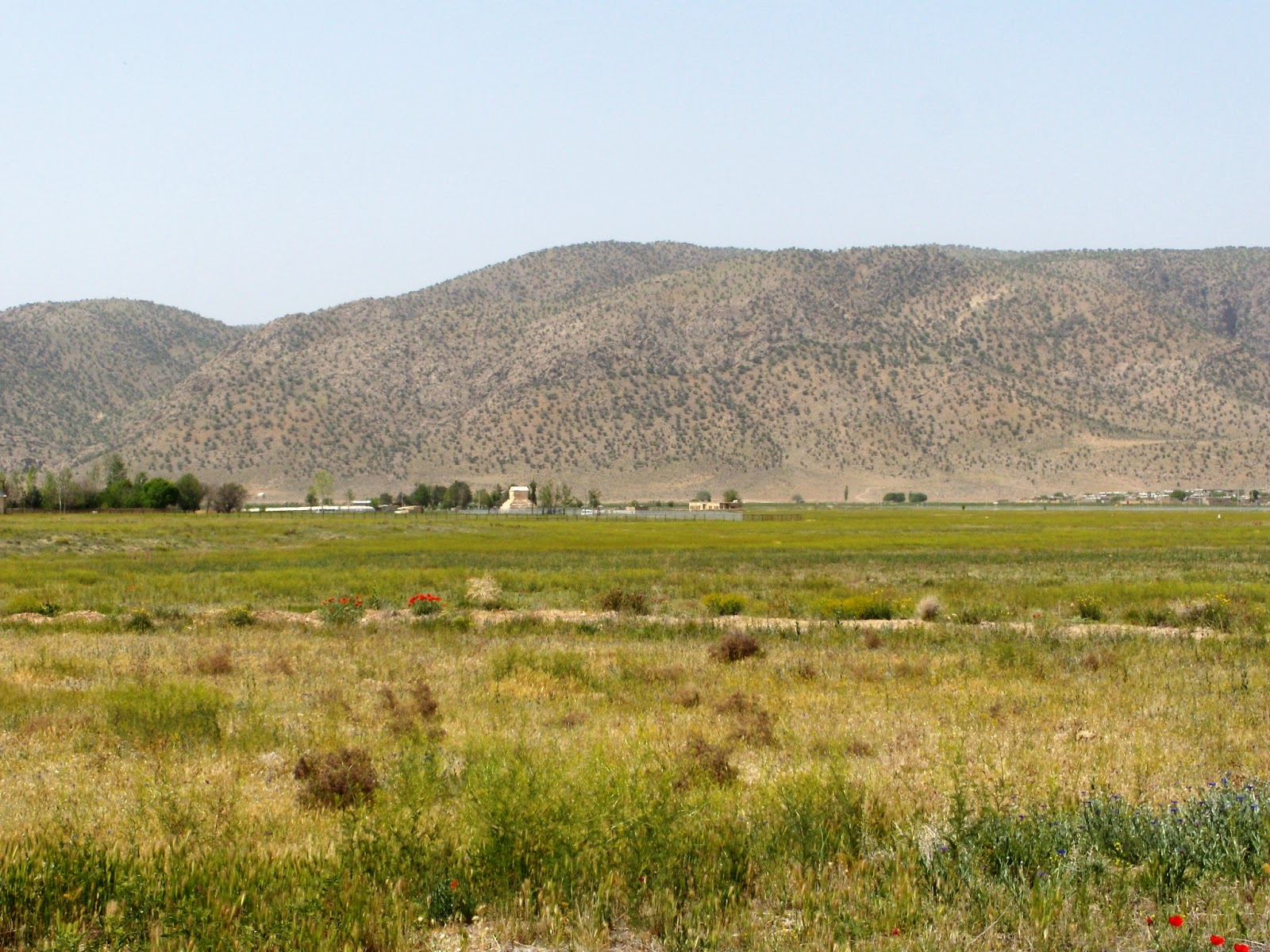
Most of the visitors who have paid tribute to Cyrus the Great at his Tomb in Pasargadae saw it in a wide flat dry plain where it is hard to find any trace of the Pulvar River (read more at: Cyrus the Great who made Pasargadae the capital of Persia and The gem of Pasargadae: the Tomb of Cyrus the Great).


The recent floods in southwestern Iran have closely endangered the archaeological sites around the city of Shiraz, and Cyrus’ Tomb is one of them. Pictures are hard to come by and the one I found is not of the best quality.

Since this short film apparently offers no means to share it in an embedded form (or I am unable to find it?), I can only offer this link to the Mehr News Agency who has published it. 

A unique view to enjoy!

Monday, April 15, 2019

The hassle about the Victorious Youth at the Getty Museum

The Getty Bronze, better known as the Victorious Youth, is a centerpiece of the Museum at the Getty Villa in Malibu but maybe not for long because Italy wants it back.

[Image via the Getty Open Content Program]

The life story of this magnificent bronze statue is a familiar one. It was created in Greece between 300-100 BC, stolen by the Romans who shipped it to Rome. As so often, the ship never arrived and its cargo, including this fine bronze, was lost somewhere in the Adriatic Sea. In 1964, Italian fishermen found the statue that somehow joined the collection of the Getty Museum.

At present, Italy’s highest court has ordered that this prize piece should be returned to Italy. The Getty appealed the decision, arguing that it was probably made outside Italy and was retrieved from international waters; after two thousand years, the piece is no longer an Italian artifact and not subject to repatriation.

Thursday, April 11, 2019

Crossing the Danube River

The mighty Danube River forms the modern border between Bulgaria and Romania, except in its lower course, where it falls entirely within Romania before emptying into the Black Sea. This is where Alexander defied the Thracians and the Triballians on their island retreat of Peuce.

He had ordered his fleet stationed at Byzantium to sail up the west coast of the Black Sea to meet him in the estuary of the Ister River (Danube). However, his ships were of no use because they were too few in number and not sufficiently manned to dislodge the enemy’s forces; besides, in most places, the river banks were too steep for a landing.

Alexander had to come up with another plan, and instead of wasting time trying to dislodge the Thracians and Triballi refugees on Peuce Island, he opted to isolate them by attacking the Getae on the opposite riverbank. Inspired by Xenophon, Alexander instructed his troops to collect the boats and dug-outs moored along the river and to stuff the army tents with hay to use them as floating devices.

Overnight, the king managed to ferry 4,000 infantrymen and 1,500 cavalry (imagine the strain on the horses!) across the estuary of the Danube. No wonder the Getae were in shock as soon as they saw the Macedonians, and they fled at the first cavalry attack. The same day, Alexander ferried the entire army back to base camp, where he received the surrender of the Triballians and Thracians pinned on Peuce Island, as well as from other tribes along the Danube.

It sounds like such a simple statement, but the logistics involved are not to be underestimated, considering the current and the width of the river. The delta is known to be strewn with many islands and sandbanks, turning any crossing into a daring challenge. Over the centuries, the bedding and the mouth of the Danube have changed dramatically, making it very hard to pinpoint the exact place where this operation took place.

In the end, the Thracians became an elite corps in Alexander’s army, successfully carrying out the roughest and most dangerous jobs. They were often praised by the king in person for their daring and often reckless attacks.  

Sunday, April 7, 2019

A unique Egyptian baris found at Thonis-Heracleion

In an earlier blog, I discussed the site of Thonis-Heracleion at the mouth of the Nile (see: Heracleion, an ancient Greek port in Egypt). Excavations revealed many ships that had sunken in its harbor – 64 at the time of my writing in 2013.

Further underwater explorations have reset the counter to 70 shipwrecks by now. Studying all these individual vessels is a lengthy process, and we must appreciate the tenacity and determination of the specialists involved to classify them into their appropriate times in history.

The latest excavations focused on what they call Ship 17, which has been dated to 664-332 BC. Please note that the year 332 BC coincides with Alexander’s arrival in Egypt.

As archaeologists uncovered 70% of the hull, this ship was prime study material. Interestingly, they could establish a link with Herodotus’ description of the Nile cargo boat called baris. Until now, they only could go by pictures of this type of vessel, but they had no archaeological confirmation (see also: Useful graffiti from ancient Egypt).

Herodotus tells us that this baris was constructed like brickwork, lined with papyrus. Its rudder passed through a hole in the keel.

We are getting very close to this appearance with Ship 17 at Thonis-Heracleion. The joints of the planks are staggered in such a way that they easily match that of bricks. The planking proper is held together by nearly two-meter-long tenons (a projection formed on the end of a timber for insertion into a mortise of the same dimension), passing through up to 11 strakes, which again match Herodotus’ words. The keel is twice as thick as the planking – another confirmation.

But then, the study hits some inconsistencies about the length of the tenons and the reinforced frame.

Alexander Belov, who published the results of his research in his book Ship 17: a baris from Thonis-Heracleion, has provided an illustrative drawing of the main elements of this baris.

[Drawing copied from Science Alert (Belov, IJNA, 2013)]

He explains that Ship 17, which is 27 meters long, is bigger than the vessel described by Herodotus, who speaks of boats with long internal ribs. This statement did not make sense without any visual image until this shipwreck provided a matching construction.

It also became clear that the rudder could be fitted in one of the two holes in the stern, possibly chosen depending on the load of the cargo.

The bottom line is that the researchers must admit that Ship 17 resembles Herodotus’ description so closely that it is almost as if he had actually seen it.

Wednesday, April 3, 2019

Saving Afghanistan's Incredible Heritage

As it is utterly impossible to summarize this wonderful article written by CNRS News, giving a thorough insight in the problems archaeology is facing in Afghanistan, I'll limit myself to the following short introduction. For further reading, I gladly refer to the link that I attach at the end.

For nearly a century, the French Archaeological Delegation in Afghanistan (DAFA) has been drawing up an inventory of the archaeological heritage of one of the world’s most unstable countries. Some 5000 sites have already been discovered, both on the ground and from the air. They reveal Afghanistan's remarkable archaeological wealth, including protohistoric, Greek, Buddhist and Islamic remains, as archaeologist Julio Bendezu-Sarmiento explains.


For the last thirty years, Afghanistan has been associated with images of war, of the Soviet occupation, civil strife, and the Taliban—to the point of concealing the extent to which the country once fired the imagination of archaeologists and adventurers of every sort. It was there that Alexander the Great, who had set out to conquer Asia, is said to have met and married the beautiful Roxana around 330 BC. Buddhism found fertile ground there too, yielding some of its most beautiful works of art, such as the tragically renowned Buddhas carved into the cliffs of the Bamiyan valley, and destroyed by the Taliban in 2001. It was also through Afghanistan that goods, such as tea, spices, precious stones and silk, travelled for centuries along the Silk Road. Located at the crossroads between central Asia, the Persian world and the cultures of the Indian sub-continent (Pakistan and India), Afghanistan has always been a source of envy, and with good reason: it is one of the countries that boasts the greatest number of mines of copper, gold, silver and even of lapis lazuli, a semi-precious stone found in the Mesopotamian tombs of Ur and in the jewelry of the Egyptian Pharaohs.

Julio Bendezu-Sarmiento, a CNRS researcher and French-Peruvian archaeologist, has headed the French Archaeological Delegation in Afghanistan (DAFA) since 2013.1 He explains why it is urgent to list Afghanistan's archaeological heritage, as a growing number of economic development projects are underway, such as the gas pipeline planned to cross the south of the country, and looting has never been so widespread. 

The French Archaeological Delegation in Afghanistan (DAFA) is the only foreign archaeological team with a permanent presence in Afghanistan. Why?

Julio Bendezu-Sarmiento: Our offices are located in Kabul, in an old building that houses a research center, a library containing 20,000 books, a restoration and a photo laboratory and storerooms. Today, we are quite simply the only foreign archaeologists still working in the country: since the bomb attack that killed 90 civilians in Kabul's diplomatic quarter in spring 2017, every other international scientific team has left. This has to do with our very close ties to Afghanistan. The DAFA was set up in 1922 at the request of King Amanullah, when the country was just beginning to open up to the outside world: in fact, the archaeologists got here before the French diplomats!

For the entire article, please click here.

The elusive tomb of Alexander the Great

Once again, the hunt is on for the tomb of Alexander - and not only in Alexandria. On a more or less regular base, we are bombarded with articles of archaeologists who have found the great conqueror’s tomb or are stepping on its tail.

The huge tumulus of Kasta Hill near Amphipolis triggered a storm of speculations, with Alexander as the main suspected occupant (see: Nonsense about Alexander’s grave in Amphipolis). Such news was only a side track from the many excavations carried out in the depths of Alexandria (see: The Lost Tomb of Alexander the Great in Egypt?) and also (see: New speculation about Alexander’s tomb). More professional studies were made by Nicholas J. Saunders (see: Alexander’s Tomb, the Two Thousand Year Obsession to Find the Lost Conqueror) and Andrew Chugg (see: The Lost Tomb of Alexander the Great and The Quest for the Tomb of Alexander the Great).

None of these “red alerts” are really conclusive, except maybe Andrew Chugg’s speculations about the tomb at San Marco in Venice, which could be checked if the church agreed to open the sarcophagus of the saint for inspection.


This being said it is not surprising to read about yet another near-discovery of Alexander’s tomb in Alexandria. How optimistic or how skeptical should we be?

At this point, at more than ten meters below the surface of the modern city, archaeologists have found buildings from Hellenistic times, including a statue of Alexander (see: Magnificent Alexander statue found in Alexandria) exhibited at the National Museum of Alexandria. They are digging in the ancient royal quarters of the Ptolemies, uncovering part of a Roman road, and a huge public building that could (of course!) lead to Alexander’s tomb.

After at least 140 officially registered excavations in Alexandria alone that led to a dead end, it makes you wonder whether in the present case, we are confronted with hopeful prospects or wishful thinking. Finding the lost tomb of Alexander the Great equals discovering the Holy Grail. What is next?

Saturday, March 30, 2019

The benefit of digitizing coins

All the museums and private collectors in the World possess innumerable coins, either from antiquity or simply dating to the past centuries or so. Until now, each coin had to be recorded and documented by hand – a labor lost.


Even the trained eye finds it difficult to immediately recognize the authenticity of a coin. There may be differences in the design according to their provenance but the coins may also be replaced by forgeries after they traveled to outside exhibitions. How can experts be sure that they really receive their original coin back?

Unlike statues, reliefs or paintings, it is impossible to label, mark or barcode the coins. Joint research of the Fraunhofer IFF (Institute for Factory Operation and Automation) in Magdeburg, and the Saxony-Anhalt State Office for Heritage Management and Archaeology, both in Germany; have developed a satisfactory scanning software.


The new scanner named O.S.C.A.R. (Optical System for Coin Analysis and Recognition) not only scans the features but also records every scratch, pit, denting or other wear, making each scanned object unique. This digitizing of both faces works very much like facial recognition of people, and guaranties an accuracy of at least 98%. The system accepts coins with diameters varying in size between 5 to 75 millimeters, no matter whether they are made of gold, silver, bronze or copper. In just a few seconds, this scanner can determine whether the coin is a full match or has been damaged or replaced by a fake.

To-date, some 10,000 coins from the above mentioned collection have been scanned and the remaining 10,000 will follow soon.


The scanning system works with several cameras and uses several light sources that shine on the coin from different angles, which in turn produces an image with high resolution. The scanner captures more than 1000 visual features for each coin and a reference charts ensures that the images are standardized in comparable color spaces. Numismatists will now be able to recognize both sides of the coins much faster and with higher precision. Eventually the data base can be compared with that of other institution.

Imagine the potential of this facial recognition system! Not only will museums and numismatics from all over the world have access to this system, but they will also be able to place each coin in their true historical context.

Tuesday, March 26, 2019

Imagine Bucephalus dressed up in his finest attire

Among the many colonies founded by Miletus on the western shore of the Black Sea is Apollonia Pontica (modern Sozopol in Bulgaria) in ca. 610 BC (see: The many colonies of Miletus). Its original name was Antheia, which soon became one of the largest naval bases and richest trade centers in the area.

By the 5th century BC, the Odrysian Kingdom was founded that lasted for six centuries. This kingdom was nothing more than a union of more than forty tribes which turned Thracia into a powerful state to be reckoned with. Both Philip and Alexander repeatedly invaded Thracia, but the city of Apollonia Pontica managed to keep its independence.

This does not alter the fact that Hellenism left its marks in the area, and recent archaeological finds immediately to the south of Apollonia Pontica in particular revealed precious goods that once belonged to the Thracian aristocracy.

In a nearby tomb, archaeologists found forty decorative gold appliqués for a horse harness. Of course, the tomb is Thracian but the Hellenistic influence is obvious. Based on a clay lamp that was buried together with these precious items, the elements could be dated between 333 and 250 BC.

The date and the finding place make a connection with Alexander very plausible and I can’t help imagining his Bucephalus wearing very similar trimmings.

The reconstruction of the horse’s headdress speaks for itself. The casted centerpiece is an eagle’s head that weighed some 23 grams. Since the eagle stands for power, this find may indicate that the owner was a member of one of the leading dynasties. Most of the gold pieces were round, and scholars were able to establish that they were meant to decorate the bridle.  The smaller gold appliqués may have been fixed onto narrow strips sewn over the main strip, or the elements may have served to decorate the bridle during certain religious parades only. Two elaborated, elongated pieces were probably part of the bit.

The Thracians were famous for their horses and it does not come as a surprise to find such fine and artistic trimming for these noble animals. 

I am amazed, however, to hear that horsemen in Thracia already used spurs. If so, it is strange that Alexander and his Macedonians did not fancy them. It seems very improbable that he would not have known this - if, once again, the theory about the spurs is correct.


[Pictures from Horse Talk, New-Zealand, by G. Balabanov, Primorsko Municipality, and Petar Balabanov, respectively]