Alexandria's founded by Alexander

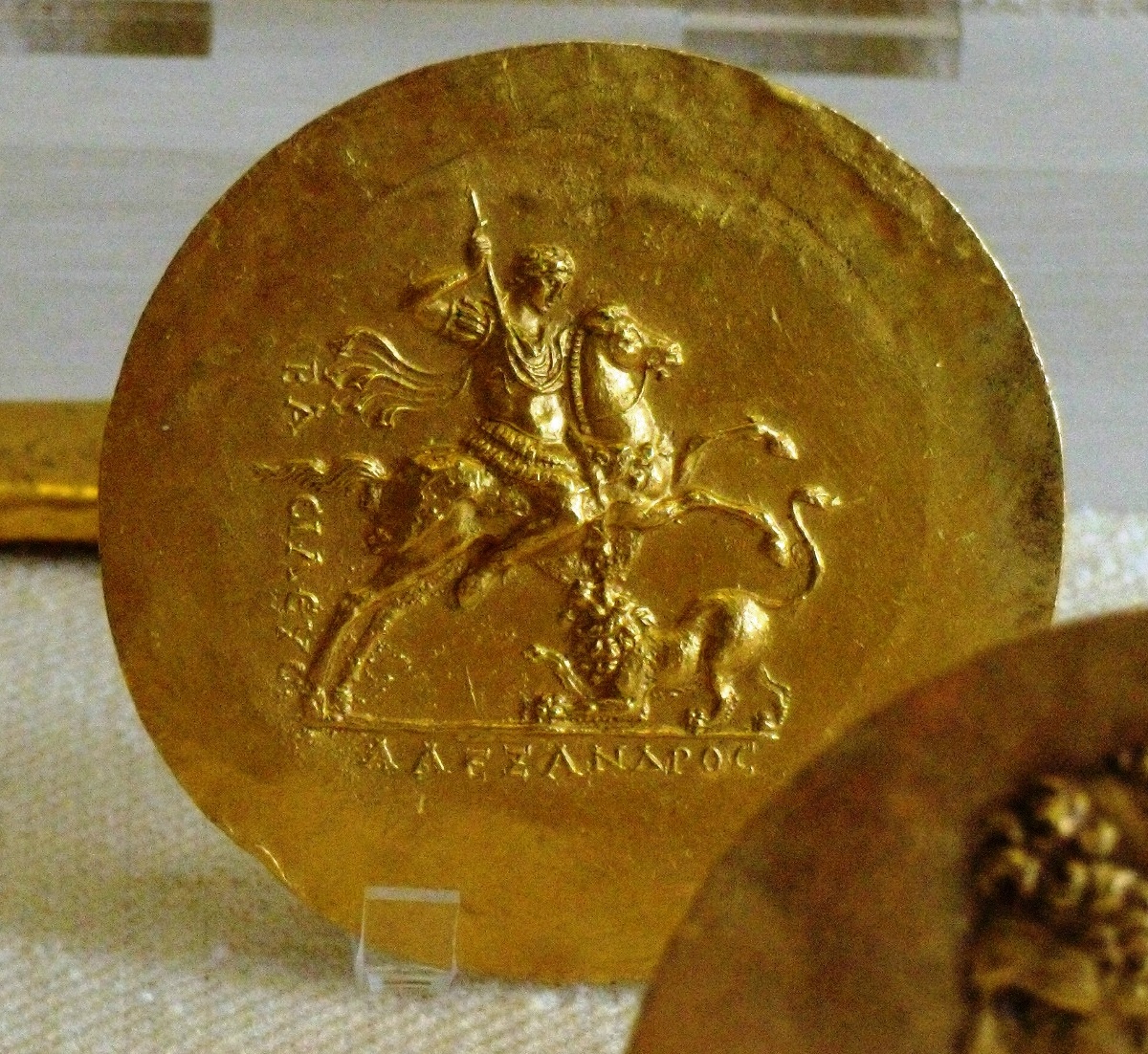
Alexandria's founded by Alexander the Great (by year BC): 334 Alexandria in Troia (Turkey) - 333 Alexandria at Issus/Alexandrette (Iskenderun, Turkey) - 332 Alexandria of Caria/by the Latmos (Alinda, Turkey) - 331 Alexandria Mygdoniae - 331 Alexandria (Egypt) - 330 Alexandria Ariana (Herat, Afghanistan) - 330 Alexandria of the Prophthasia/in Dragiana/Phrada (Farah, Afghanistan) - 330 Alexandria in Arachosia (Kandahar, Afghanistan) - 330 Alexandria in the Caucasus (Begram, Afghanistan) - 329 Alexandria of the Paropanisades (Ghazni, Afghanistan) - 329 Alexandria Eschate or Ultima (Khodjend, Tajikistan) - 329 Alexandria on the Oxus (Termez, Afghanistan) - 328 Alexandria in Margiana (Merv, Turkmenistan) - 326 Alexandria Nicaea (on the Hydaspes, India) - 326 Alexandria Bucephala (on the Hydaspes, India) - 325 Alexandria Sogdia - 325 Alexandria Oreitide - 325 Alexandria in Opiene / Alexandria on the Indus (confluence of Indus & Acesines, India) - 325 Alexandria Rambacia (Bela, Pakistan) - 325 Alexandria Xylinepolis (Patala, India) - 325 Alexandria in Carminia (Gulashkird, Iran) - 324 Alexandria-on-the-Tigris/Antiochia-in-Susiana/Charax (Spasinou Charax on the Tigris, Iraq) - ?Alexandria of Carmahle? (Kahnu)

Wednesday, June 25, 2014

Pella, the birthplace of Alexander the Great

Pella became the capital of Macedonia in the early 4th century BC. The choice for the location is, as always, made with great care. Situated at the mouth of the Axios River, the city had direct access to the sea, although the harbor has not yet been located. That is not surprising, for today’s Pella lies 25 km inland, as over the past two thousand years, the river has silted up and has covered the remains of the settlement. The land was fertile, however, sloping up gently towards the mountains, which are now part of the Republic of Macedonia. Standing here, it is not difficult to mentally erase the houses and roads and imagine what it may have looked like in Alexander’s days with fields of barley, wheat, and oats, or rows of olive trees followed by fruit trees, mainly peaches and pomegranates – a garden of Eden.

Any first-time visitor to Pella will be struck by the American layout of the street plan, all house blocks of the same size, and all streets crossing each other at a right angle. The east-west roads were nine meters wide, while the north-south streets were a mere six meters. A wider ornamental road, 15 meters wide, ran through the city center to the Agora. Pella knew an excellent water supply, and a close look would reveal the underlying functional system, with at the crossroad a special earthen urn that collected the dirt and could easily be removed for cleaning. The city counted many wells and fountains, combined with an efficient drainage system.

Excavations are ongoing, with the ups and downs that typically go hand in hand with finances. When I was here the first time in 1973, there were only a few pebble mosaic floors amidst a handful of slender Ionic columns; the most precious mosaics leaned against a shack covered with a piece of roofing. Since then, the excavated surface has expanded steadily, and a first small museum housed the earlier exposed mosaics together with marble and terracotta statues, among which a head of Alexander as a young prince and a statue representing him as Pan. Most recently, a new museum has been built where many more artifacts have joined the collection, now exhibited in chronological order.

The true eye-catchers at the Archaeological Museum of Pella are, of course, the pebble mosaics: a Lion Hunt featuring Alexander and Craterus; Dionysus Seated on a Panther and Carrying the Thyrsus Staff; a Griffon Attacking a Deer; and a couple of centaurs. As always, I’m entirely taken by the Tanagra statuettes, among which are those of two ladies playing the lyre, a couple of playful cupids, and several heads with ladies showing all sorts of hairdos. From the potters’ quarters, there is a wide selection of pots, vases, and other vessels, very representative of their period in time. Striking are the ivory and bone elements from now perished wooden kline or couches that have partially been reconstructed. Further, several golden crowns, a wide choice of silver and gold coins, remains of a frescoed wall from the second century BC, a small marble horseman, although decapitated, still carrying a proud posture; a marble inlaid round table, etc.

The mosaics of Pella are quite unique since they are mainly made with pebbles of different sizes, ranging from white to grey to bluish-grey, collected from the nearby beach and arranged in patterns. Here and there, a touch of yellow or red is added to enhance the picture, and the contours are accentuated using bronze strips. The large mosaic of the Rape of Helena has remained in situ under a protective roof. Such dynamics with the horses in full gallop and the dashing dresses; the edges of the panel are trimmed with palmetto and acanthus motives. The next room is paved with a mosaic showing a Deer Hunt, also in full action. This house alone covers a surface of 3,000 m2. The private houses varied in size, and the rooms were arranged around a central courtyard, generally framed by colonnades. Many mosaics have been covered up with sand to protect them, an understandable precaution, but very sad to find them hidden from view.

The Agora, covering 700 m2 in the heart of Pella, underwent thorough restoration, making the layout easier to understand with the six-meter-wide surrounding Stoas that gave access to a wide array of workshops and shops selling food, pottery, jewelry, and more. On the north side, official buildings have been identified, like the Temple of Aphrodite and others supposedly serving the city’s administration. The southwestern side may have housed the archives since many seals used to secure the papyri have been retrieved. More houses were uncovered on the south side of the old main road, which now runs right through the middle of ancient Pella. It is here that the intriguing round Sanctuary of Darron has been identified, whose striking mosaic floor has been transferred to the Museum. 

The Royal Palace of Pella, where Prince Alexander grew up, is located further uphill to the north - still within reach of the city. The Palace alone covers an area of 6 ha and was divided into seven separate complexes, including, beside the living quarters, the necessary storage rooms, rooms reserved for entertainment, service rooms, and even a swimming pool and a palestra. These complexes were, of course, interconnected by corridors and staircases. The royal family must have occupied the most central part, with four large buildings around a large open courtyard. It would be interesting to figure out how close Philip’s wives lived to each other, how much space was occupied by the official administration and military management, where the many visiting delegations were lodged, which rooms the King used to receive his guests, etc. 


The Palace was supposed to open to the public in 2011, but at the last moment, it was decided to restart more archaeological work on the premises. I was not allowed inside, but I could at least walk all the way around it, taking in the view over the city of Pella and the sea beyond. Behind me, the Macedonian landscape was covered with bright spring flowers from the white chamomile and pink hollyhock to the deep red puppies and purple wild onions – an explosion of colors over the rolling hills. It felt like a homecoming, in an intoxicating excitement. The land is pleasantly green, cut through by refreshing, clear streams tumbling down from higher elevations under the blue sky filled with fleets of puffy clouds. This is truly the place where Alexander spent his youth!

Like other boys and young men his age, Alexander would have been hunting boar, foxes, and lions (who have long since gone), probably in the hills to the north. We have the abovementioned mosaic of the Lion Hunt with Craterus to illustrate the hunting parties and also the fresco above the Tomb of Philip at Aegae (modern Vergina). Hunting was a way to train for war and to develop physical and mental skills. Without his friends, Alexander would have had a rather lonely youth since his father was constantly fighting the neighboring tribes and cities in order to extend and stabilize Macedonia. The young prince grew up with the stories of his father’s campaigns that must have fueled his imagination; based on the legends of Troy, he treasured them all his life. Around age twelve, Philip invited Aristotle to teach the young prince and even found an appropriate location at the temple of the Nymphs in Mieza.  These probably were the years when Alexander learned the most in many fields, like literature, topography, biology, zoology, botany, ethics, and even meteorology – a knowledge he shared with his boyhood friends such as Hephaistion, Ptolemy, and Nearchus [see: Mieza, Alexander's schooling]. Alexander’s interest in medicine must have come from these days with Aristotle, a skill he used throughout his life to treat his sick friends.

Macedonia was not an isolated “Barbarian” country as so often stated, but the court had long been a center for culture where envoys, refugees, artists, actors, and delegates from all around the Mediterranean spent time. Alexander’s knowledge of the world extended thus far beyond his homeland, and he and his immediate neighbors must have had quite a broad insight into what was going on in other parts of the ancient world. Theopompus of Chios, who later on wrote a History of Philip, was one of the visitors. Envoys from Sparta, Thebes, Thessaly, and Phocis found their way to Pella. Athens sent several ambassadors to the capital to end the successive Sacred Wars, and we know that negotiators like Demosthenes, Aeschines, Philocrates, and Nausicles participated in these missions. More significant was the presence of Artabazus II, satrap of Hellespontine Phrygia, who revolted against Persian rule and found refuge at Philip’s court. He spent several years there with his wives and children, among which his eldest daughter Barsine. She was about seven years older than Alexander, and we know how they met again many years later when she became his mistress and even bore him a son, Heracles

When Philip appointed his 16-year-old son as Regent while he went fighting in the east, Alexander must have realized how much his father trusted him, and at the same time, he recognized him as the official heir to the throne. These feelings were stressed again two years later during the Battle of Chaironeia, where Alexander not only proved his leadership and capability in military matters at the head of the cavalry, but he also crushed the Sacred Band of Thebes, which was known to be invincible; this must have boosted his ego to an even higher level. Alexander must have felt ready to take command, not only of the army but maybe also of the kingdom. Realizing, however, that his father was “only” in his mid-forties and that he would have to wait a very long time to take over his tasks must have been hard to accept. He would have to live in the shadow of his powerful father for another twenty years at least.

Shortly afterward, some worrying situations developed. Philip married for the seventh time, this time with Cleopatra, the niece of one of his leading generals, Attalus, who, during the wedding feast, proclaimed that Macedonia would at last have a legitimate heir to the throne! Alexander’s mother was from Epirus, meaning Alexander was only half Macedonian. Alexander was enraged by Attalus’ remark and asked his father to reprimand his general. He did not, and Alexander promptly left the Macedonian court with his mother. He entrusted her to her brother’s care, Alexandros of Epirus, when he joined the Illyrians, making Philip worry about his earlier peace treaty with them. When the King sobered up, he realized that he had to recall his son, which he did through the intervention of Demaratus of Corinth, a common friend. He also had to make up with his brother-in-law to avoid a possible revolt in the neighboring Epirus. To this purpose, he offered his own daughter in marriage to his wife’s brother, meaning that Alexander’s sister was to marry her uncle. It was during this wedding feast that King Philip II of Macedonia was murdered. 

By the time Alexander celebrated his twentieth birthday, another drama unfolded at the Macedonian court. Philip was approached by Pixodarus of Caria for a marriage alliance. Philip put his eldest (half-witted) son Arrhidaeus forward to marry Ada, the younger daughter of Pixodarus. When Alexander heard the news, he felt overlooked and secretly sent the tragic actor Thettalus to renegotiate the deal, presenting himself instead of Arrhidaeus. When Philip got wind of this plot behind his back, it was his turn to be furious, for he was still King and ruler of Macedonia, not his son. As a punishment, he exiled a group of Alexander’s closest friends – among them Nearchus, Ptolemy, Harpalus, and Erigyius – and warned his son not to interfere in his plans ever again. It is known that Alexander rewarded his friends later on for their loyalty to high positions in his army. 

A few months later, the wedding of Cleopatra and Alexandros of Epirus was to be celebrated at Aegae in great pomp. This is when King Philip II was murdered. Alexander became the new king of Macedonia. This story will be tackled next under the title, Aegae, where Alexander's world changed forever.

Sunday, June 22, 2014

What Alexander did for us?

Sounds like the BBC program “What the ancients did for us”, right? Well, this is a little different for it is about food. 

Oh yes, I read this article about citron, a citrus fruit that has its origins in India. It is a small thorny tree of 2,5 to 4 meters high that grows in the region between Bhutan and Myanmar, along the Brahmaputra River.


It happens that around 300 BC soldiers of Alexander the Great brought the fruit back to the West. Meanwhile, there seem to be several varieties and the oldest orchards can be found in southern Italy in the region of Calabria, where there is an entire coastline called Riviera dei Cedri. The pulp from the citrons in Calabria and Sicily is rather sour, while that from the trees in Corsica and Morocco is sweet.

Never heard of citrons? Of course, you have! It is the candied peel that we add to our cakes and cookies, or that we coat with chocolate to create the orangettes or citronettes. The French word for it is cédrat, and in Dutch cederappel (literally apple from the cedar tree), which in turn is close to cedre the Italian word for it.

Strangely enough, the Italians still serve the fresh fruit in slices with a sprinkle of salt to accompany their aperitifs. We should give it a try, shouldn’t we?

Friday, June 20, 2014

A plea for Macedonia

Just watch this short film that appeared under the label “A country without Pella is not Macedonia” – it should be enough to convince anyone …


More of the kind can be found on this same site “History of Macedonia”, a proud Macedonian true to his roots.

Friday, June 13, 2014

Haggling over the silver hoard of Morgantina

The main treasures exhibited at the Museum of Morgantina are, strangely enough, the result of illegal diggings that found their way via clandestine channels to museums in the United States. The Ladies of Morgantina which I discussed earlier were eventually located by experts at the University of Virginia Art Museum


Yet, that is not all for through the same channels a 15-piece silver hoard was smuggled from the so-called House of Eupolemos on the site of Morgantina in Sicily to show up at the Metropolitan Museum of Art in New York. Evidence for the looting goes back to the 1980’s but discussions back and forth with the Italian authorities dragged on for years. Finally in 2006 an agreement was reached between the Metropolitan Museum, the Italian government and the regional government of Sicily to restitute the treasure under condition to return it to New-York Metropolitan this year for a period of four years. Since it was beyond doubt that the vessels came from the site of Morgantina, the treasure arrived back where it belongs in 2010.

Of course, considering the American point of view, the above deal makes some sense. The Met put down nearly three million dollars during the years 1981-1982 for this Hellenistic silver believed to come from Turkey and wants to cash in on the money spent. But then the Sicilians rightfully say that these unique vessels belong to the place where they were found and should be exhibited at the Museo Regionale di Aidone next to the site of Morgantina. Since November last year, difficult negotiations are taking place to keep this hoard of Eupolemos where it is now in exchange for a possible loan of other artifacts to the Metropolitan. The Met is not commenting on this suggestion although they are at least open for further discussions. Diplomatic responses are being expressed but nothing conclusive so far (See this article in The Art Newspaper).

Thanks to a coin found at the House of Eupolemos, the silverware can be dated to 214-212 BC. These were turbulent years when Carthage and Rome fought each other in the Second Punic War over the supremacy of Sicily. According to Livy, Morgantina was attacked in 211 BC and conquered by the Romans, events that coincides with the time the hoard was hidden. An inscription on a lead-tablet reveals the name of Eupolemos, who is either a high-priest, or the owner or keeper of this precious silverware.  It is probable that when the Roman army entered Morgantina, the silver was buried in the basement of Eupolemos’ house. 

The most striking piece may well be an 11 cm-high miniature silver altar weighing as much as 370 grams and decorated with an Ionic dentil and a Doric frieze of metopes and triglyphs; four ox-heads crowned with a gold star hold the surrounding gilded garland. This altar probably was used for offerings at home, but that is not certain. (More details in this interesting article: “Another thing: Recovered loss – altar from the Morgantina Treasure”).

Beside this special altar, we can admire two large oval bowls for mixing wine; three drinking cups with in their bottom a relief of flowers and leaves; a small cup with fishnet motive (looks like a modern football); a pitcher; a kylix (wide drinking cup with two handles); a phiale (offering-dish) with sunrays; a ladle; two pyxides (round box) one showing a cupid carrying a torch on its lid and the other a lady holding a child on her lap; a magnificent medallion with a picture of Scylla; and two slender horns that probably were part of a leather priest-mask. Several of these objects have inscriptions with dedications to the gods, leading to believe that they were used for libations. 

A closer examination of this silverware has revealed that the vessels were made by artists from Syracuse, making them the only examples of the fine silversmith’s art during the second half third century BC when the city was at the top of its power and prosperity. 

Can you imagine the craftsmanship that existed already in Alexander’s days? Hard to fathom. 

Monday, June 9, 2014

Syracuse rivaled Athens to be the most powerful city

Syracuse always had a magical sound, tucked away down south of Italy on the island of Sicily, that, like no other, was and still is at the crossroads between east and west, north and south. This strategic location not only shows on the map of the Mediterranean but more so when you visit the island. That is precisely what I finally did after dreaming about it since my teenage years. Finding myself in the very heart of Syracuse, it is hard to describe what I feel or expect. I’m totally overwhelmed, as if floating on some imaginary sea, the currents taking me to the core of its great past.

It may come as a surprise to learn that Syracuse once rivaled Athens for its power over the Greek world, but as part of Magna Graeciathis was Greece away from Greece, which we have to approach from a totally different angle. Syracuse was the very first city to be settled in Sicily, and it was the Corinthians who, in 733 BC, disembarked on the small island of Ortygia just off the coast. It was soon attached to the mainland by a causeway, creating two practical harbors, one on the southwest and one on the northeast. Syracuse grew quickly and then created its own colonies, like Akrai, Kasmenai, Heloros, and Kamarina.

With its expansion came the need for some form of government. Not being happy with the Corinthian aristocrats who imposed themselves from the onset, Syracuse turned to Gelon, tyrant of neighboring Gela, a colony of Rhodians and Cretans that had settled as early as 688 BC. Gelon took his task seriously and moved the larger part of Gela’s population to Syracuse, which became his capital in 485 BC. The Syracusans must have felt they made the right decision, for Gelon was able to defeat the Carthaginians at nearby Himera five years later. However, it must be said he did so with the help of his father-in-law, Theron of Akragas (modern Agrigento). This at least kept the matter in the family. The victorious Gelon had taken thousands of prisoners of war, whom he now enslaved. The finest artisans among them built a temple at the summit of Ortygia dedicated to Athena to thank her for this victory. It probably was finished in 480 BC.

We can still admire this temple in the old town of Syracuse as an integral part of the cathedral (Duomo), whose façade was rebuilt in 1728-1754 in Sicilian-Baroque style after several earthquakes had damaged the Norman entrance. Isn’t it amazing that a place of worship has been used and reused continuously for 2,500 years? This temple was erected in the Doric style, six columns wide and fourteen deep, with doors inlaid with ivory and gold. The larger-than-life statue of Athena would have ruled over the inside, an imposing figure made of Paros marble with her face, hands, feet, and weapons of pure gold. The tympanum of the temple was enhanced with a golden shield that reflected the sunlight, a landmark to the sailors. A refined statement of the city’s wealth, no doubt, till it was taken down by a too-greedy Roman politician, Caius Verres, some four hundred years later.

In Byzantine times, the temple was converted into a church, and the cella walls were pierced to create open arches while the space between the columns was walled up. Under the Arabs, the church became a mosque. Traces of this period can be seen on the outside walls where the Muslims added crenellations above the Greek triglyphs and metopes. Upon their arrival, the Normans raised the roof and inserted narrow windows. The chestnut ceiling is a later Spanish addition (using the hard chestnut wood from the Etna region). I read all this information but still need to figure out what to expect from this sanctuary that is right around the corner from my hotel.


The Baroque façade flanked by statues of the apostles Peter and Paul, carved in pure Carrara marble, doesn’t betray what the inside has in store for me. Once I cross the threshold of the Duomo, I am stepping into another world. It literally takes my breath away as I’m immediately confronted with the interior of a Greek temple – or at least as close as one can come to it. I’m standing in the temple’s opisthodomos, looking into the north apse between the outer columns (now walled) and the wall of the cella. The Byzantines have opened that up to let the light flow through the inner sanctuary. The narrow windows the Normans inserted near the capitals of the Doric columns filter the late-afternoon sunlight. There are more windows above the vaulted walls of the inner cella, where stylish chandeliers add to the eerie atmosphere of this church. It is hard to figure out which part is Greek, Byzantine, or Norman, but the result is absolutely superb and harmonious. Along both sides of the modern nave, we can read the Latin inscription “Ecclesia Syracusana prima Divi Petri filia et prima post Antiochenam Christo dicata.” In other words, “The church of Syracuse is the first daughter of divine Peter and the first to be dedicated to Christ after Antioch,” i.e., a confirmation that this is the oldest Christian community in Europe.

Two columns from the original opisthodomos of the cella flank the entrance door. Another twelve columns on the north and nine on the south side are still in situ, sturdy Doric fluted columns almost nine meters high and two meters in diameter! The twelve columns of the north side are also visible from the Via Minerva, around the corner of the piazza. They include their architrave and triglyphs above which the Muslim crenellation has been added.

The floor of the Duomo is covered with colored marble, and I wonder about the dating of the different designs, interrupted by colorful tombstones that carry coats of arms. The main altar is typical 16th century with a painting of the Nativity of the Virgin, which I find somewhat out of place, as much as I am absorbed by the antique Greek remains. In the eastern corner is a chapel, the Cappella del Crocifisso, with ceiling frescos that remind me of the Sixteen Chapel at a very early stage. There are two more chapels along the south wall, but these are unfortunately closed at the time of my visit.

Walking back to the entrance, I get an unexpected glimpse of the north aisle and notice three commanding statues positioned in the perfect place between the columns and the openings in the cella-wall. They could well be antique gods or goddesses as far as I am concerned, but on closer look, they are 15th-century statues of St Lucy, a Madonna with Child, and St Catherine of Alexandria, made in pure white Carrara marble.


Amazing how this amalgam of architectural styles and religions can trick the eye and the mind. A true jewel, though …

[Click here to see all the pictures of Akrai]

Wednesday, June 4, 2014

Who is Alexander? Part I

That is a good question, especially since most people have no idea. The answer, however, is a challenge. Alexander the Great was the greatest general ever and one of the world's greatest conquerors, creating an empire reaching from Greece to India and from the Caspian Sea to Egypt. His exploits have been handed down over the centuries and still fuel serious discussions 2,500 years after his death. Yet his fame among the general public is overtaken by people like Julius Caesar, Genghis Khan, and Napoleon, to name only a few – a very unfortunate fate for such a great man!

Alexander was born as the son of King Philip II of Macedonia and Queen Olympiasmeaning that on his father's side, he was a descendant of Heracles, and on his mother's side, of Achilles. At age twenty, in 336 BC, he ascended the throne after his father was murdered. It took him two years to secure Macedonia's northern borders and obtain recognition from the other Greek city-states to act as their leader in his campaign to free the Greek cities of Asia Minor still under Persian rule. By capturing all the harbors of the eastern Mediterranean, he inevitably made the Persian navy inoperative and obsolete. He faced the Great King Darius III during the Battle of Gaugamela and came out victorious, although he had not captured the King. That happened only after a wild chase further east in Central Asia's heart. Having acquired the title of King of Asia, he pursued his dream east to the Indus, where his army mutinied and refused to march further east. Alexander had no choice but to turn back. In 323 BC in Babylon, he died from an unconfirmed illness – not the heroic death he evidently must have wished for (see updated info: About the death of Alexander). During his years of kingship, he outdid and outshone every King before and after him.
 
His life and exploits have reached us only second-hand as the original texts by his court historians, Callisthenes, the nephew of Aristotle, and Eumenes, his father's secretary, were lost in time. King Ptolemy I Soter of Egypt, of Macedonian stock and one of Alexander's generals, wrote an Alexander biography which, although lost, was still available at the time Plutarch, Arrian, Diodorus, and Curtius wrote their histories. There are other, less complete literary sources to which we must add information provided by archaeological excavations and discoveries – an ongoing process. 

Unfortunately, there is no easy way to summarize Alexander's all too short life, crammed with battles, sieges, campaigns, and endless marches over hills, crossing rivers, deserts, and towering mountain ranges. The further east he moved, the more challenging his operations became as he ventured through generally uncharted territories.  

So, it may be best to illustrate his life and exploits piecemeal, just as I discovered them over the years. An excellent place to start is Pella in modern Greece, where Alexander was born in the early summer of 356 BC. In fact, his birth coincided with the fire of the Temple of Artemis in Ephesusand it is said that the goddess was too busy helping Alexander into this world, neglecting her temple duties. Legend or not, the fact remains that Alexander made quite an entrance on the stage of life! 

We know very little about his youth, which 
Plutarch tells us nearly exclusively. Every schoolboy, however, is familiar with the story of Alexander taming the wild horse BucephalusKing Philip was presented with an unusual Thessalian horse during the yearly horse market. The horse reared up, ignoring all commands, and Philip found it unmanageable and vicious, not the kind of mount he would trust in the heat of a battle. But the ten-year-old Alexander had other ideas and wanted to have this horse at all costs, much to Philip's annoyance, no doubt, as he was himself a fine connoisseur. Anyway, the King gave his son a chance. Alexander had noticed that the horse was afraid of his own shadow and turned him to face the sun, whispered sweet words in his ear, and was able to calm him down. This is how he won his confidence and managed to ride him to the greatest joy and probably relief for his father and all present. This may have been when Philip exclaimed, "look for another kingdom, my son; Macedonia is too little for you." Alexander called his horse Bucephalus, meaning Oxhead, after the white blaze on its head. Since that day, Alexander and Bucephalus 
have been inseparable. When his magnificent mount died of old age in India, he even named a city after it.

Plutarch also tells us another anecdote about young Alexander, who apparently received a group of ambassadors from Persia in his father's absence. The prince impressed them by asking the right questions that were not childish. He inquired, for instance, about the roads leading to the heart of Asia, their King, and how he carried himself towards his enemies, what size of army he could muster, and other things along that line. Useless to say that the Persian delegates were very much impressed and full of admiration for the son of Philip.

Alexander's first preceptor was the austere Leonidas, a kinsman of Queen Olympias, followed by Lysimachos the Acarnanian, who called himself Phoenix, and Alexander Achilles. When the young prince was about twelve years old, his father sent for Aristotlethe most learned and celebrated philosopher of his time. He thought the temple of the Nymphs at Mieza was the appropriate location (see: Mieza, Alexander's schooling). With boys his age, he received the doctrine of Morals and Politics, and those theories the philosophers professed, for oral communication only to the initiated. Alexander's interest in medicine must have come from Aristotlea skill he used to treat his sick friends throughout his life.
 
Even King Philip must have noticed and recognized how bright and intelligent his son was. After all, 
he trusted him with the seal of Macedonia while he led an expedition against ByzantiumAlexander was only sixteen years old at the time and proved up to his role of Regent as he successfully fought the rebellious Maedi. That is when he founded his first city.
 
At the Battle of Chaironeia, opposing King Philip's forces against an alliance of the Greek city-states led by Athens and Thebes, who felt that Macedonia under Philip was gaining too much power, the King entrusted his son with the command of the left wing. At eighteen, the young prince and his cavalry killed the unbeatable Theban Band to the last man, eliminating the centuries-old entity for good. Despite Athens' resentment to accept Macedonia as their equal in the repeated peace negotiations, they were ruled by the master of all the free city-states, although they so profoundly believed in their own freedom. That winter, Philip summoned them to send their delegation to Corinth, and soon The League of Corinth was born. This meant that each state individually had to swear not to harm any other member of the Common Peace (or Philip or his descendants, for that matter) and not interfere in their internal affairs. They also swore not to become allies with any foreign power that could damage any member of the Treaty. No member could undertake any operation that might endanger the peace or overthrow its constitution.

This is, in a nutshell, the baggage Alexander had accumulated when his father was brutally murdered during the wedding of his daughter Cleopatra, Alexander's sister, in the summer of 336 BC. Alexander, now twenty years old, became King of Macedonia and Hegemon of all Greece, except Sparta, which always wanted to stand apart. His task was to continue in his father's footsteps, who had already made preparations to free the Greeks of Asia Minor.

[Picture of Philip and Alexander from Oliver Stone's movie Alexander]