Alexandria's founded by Alexander

Alexandria's founded by Alexander the Great (by year BC): 334 Alexandria in Troia (Turkey) - 333 Alexandria at Issus/Alexandrette (Iskenderun, Turkey) - 332 Alexandria of Caria/by the Latmos (Alinda, Turkey) - 331 Alexandria Mygdoniae - 331 Alexandria (Egypt) - 330 Alexandria Ariana (Herat, Afghanistan) - 330 Alexandria of the Prophthasia/in Dragiana/Phrada (Farah, Afghanistan) - 330 Alexandria in Arachosia (Kandahar, Afghanistan) - 330 Alexandria in the Caucasus (Begram, Afghanistan) - 329 Alexandria of the Paropanisades (Ghazni, Afghanistan) - 329 Alexandria Eschate or Ultima (Khodjend, Tajikistan) - 329 Alexandria on the Oxus (Termez, Afghanistan) - 328 Alexandria in Margiana (Merv, Turkmenistan) - 326 Alexandria Nicaea (on the Hydaspes, India) - 326 Alexandria Bucephala (on the Hydaspes, India) - 325 Alexandria Sogdia - 325 Alexandria Oreitide - 325 Alexandria in Opiene / Alexandria on the Indus (confluence of Indus & Acesines, India) - 325 Alexandria Rambacia (Bela, Pakistan) - 325 Alexandria Xylinepolis (Patala, India) - 325 Alexandria in Carminia (Gulashkird, Iran) - 324 Alexandria-on-the-Tigris/Antiochia-in-Susiana/Charax (Spasinou Charax on the Tigris, Iraq) - ?Alexandria of Carmahle? (Kahnu)

Tuesday, September 22, 2015

Sassanid reliefs tell a story of their own in Persia

Traveling through Iran, you simply can’t miss these many reliefs. The Sassanid kings definitely were not modest and took pride in advertising their investiture and their conquests on several cliff walls, generally located close to a water source. Yet, you’ll ask, what is their connection to Alexander the Great?

Well, it may be far-fetched, but whatever you think, Hellenism and today’s way of living are all a consequence of Alexander’s conquests anyway; so why not include the Sassanids to start with? Another reason is that the Sassanid kings tried to recreate the Achaemenid Empire and repossess the territories that fell under their rule some five hundred years before.

As we know, the Achaemenid Empire ended when Alexander the Great conquered Persia, his first step being his victory at the Battle of Gaugamela in 331 BC and his final move being the execution of Bessus, the self-appointed successor of King Darius III in 329 BC. After Alexander died in 323 BC, his empire was eventually divided among his leading generals. Seleucos I ruled over the eastern part of Alexander’s Empire from 312 BC onwards, and his realm included Persia. But soon, the Parthians from northern Iran would revolt against the Seleucids, and by 171 BC, their King Mithridates the Great really put his new empire on the map to include, besides modern Iran, Iraq, and Armenia, parts of Afghanistan, Turkmenistan, Azerbaijan, and Turkey as well. The Parthian empire collapsed when the Persians of the Sassanid dynasty took over in 224 AD. That’s it in a nutshell, of course.

The Sassanid kings, in turn, ruled for more than four hundred years, and it is not surprising that they left a heritage of their own. Overall, they wanted to emulate the Achaemenids in their art, and the figures in the reliefs are still rather stiff and emotionless, although the flow of their dresses hints at a slight Greek influence. A noticeable difference is also that some of the personages are shown facing the onlooker or at least in a three-quarters position and not in profile, as the Achaemenids did.

It does come as a surprise to find the far-reaching impression Hellenism has left in Sogdiana, Bactria, or India, while here in Sassanid Persia, it hardly shows. Looking at their silver tableware or at their coinage, it is even very hard to tell them apart from similar Achaemenid artifacts.

Taq-i Bostan
The first Sassanid reliefs I came to see were those of Taq-i Bostan, an idyllic place set along a reflecting pool fed by several sacred springs not too far from the city of Kermanshah in western Iran. The main features are two arches. The largest one and most lavishly decorated is showing the investiture of King Khosrow II, who ruled from 591 to 628 AD. On the upper level, he is standing between Ahuramazda and the goddess Anahita (see: The powerful goddess Anahita in Persia), and on the lower register, the king is on horseback. Both side walls are richly decorated with hunting scenes of wild boars on the left and deer on the right side. The carved angels floating above the iwan stand for victory.

The smaller arch or iwan contains a relief of King Shapur III (who reigned from 383 to 388 AD) facing his father Shapur II (the Great), who ruled from 309 to 379 AD. Next to each king is an explanatory inscription in Pahlavi giving the names of their respective father and grandfather. It specifies that each king worshipped Ahuramazda and ruled over Iran and “non-Iran.”

Past these two arches is another relief, this time cut into the very cliff wall itself. This is the oldest relief and represents the investiture of King Ardashir II (379-383 AD) on foot. He is receiving his crown from Ahuramazda, standing next to him, while on his other side, we recognize the god Mithra, who is carrying the sacred barsom (bundle of small rods), symbolizing power. This investiture includes Ardashir’s triumph over the Roman Emperor Julian the Apostate in 363 AD, who is lying at his feet.

The next reliefs I’m encountering are those of Tang-i Tchogan at Bishapur, located between Kazarun and Shiraz, along the Shapur River, glorifying King Shapur I, who founded Bishapur in 266 AD. From this new capital with its unique and awkward Temple of Anahita (see: The powerful goddess Anahita in Persia), we have to cross the river for a closer look at the six Sassanid rock reliefs in the cliffs facing us.

It is at Bishapur that Shapur I (reigned from 241 to 272 AD) inaugurated the Sassanid imagery of the king's investiture, which would be copied by his successors: the king and the god are face to face, often on horseback, and the god - usually Ahuramazda - is handing the royal diadem over to the sovereign. Shapur I is represented on three separate reliefs, commemorating his triple triumph over Rome, having killed Gordian III (in 244 AD), forced Philip the Arab to surrender (also in 244 AD), and captured Valerian (in 260 AD) – no small matter, of course.

The largest relief is nearly 12.5 meters long and 4.50 meters high and is divided into several distinctive parts. At its center, we see the investiture of Shapur I riding his horse, whose left hoof is resting on the head of the defeated Emperor Gordian III lying at his feet. At the same time, the king is grasping the wrist of Emperor Philip the Arab, standing next to him. Facing him, we recognize the kneeling Emperor Valerian begging for mercy while two Persian dignitaries are standing behind him. Above King Shapur’s head, we notice a winged Nike (a Greek influence, after all!) holding the crown of victory. The left panel is split into two registers, one above the other, in which five Persian horsemen are depicted in profile. The right panel, also split into two rows, shows five smaller scenes that cannot be identified properly, but where we recognize the Persian army and possibly mercenaries from different parts of the empire.

The next relief is set in a concave part of the cliff and is 6.80 meters high and 9.20 meters wide. Surprisingly, it has been inspired by the Column of Trajan in Rome. In the center, we find King Shapur I in the same traditional composition as seen in the previous relief, with Emperor Gordian stretched underneath his horse and the king holding the wrist of Philip the Arab. The panels on either side are very elaborate and detailed. Unfortunately, during my visit, the view was impaired by a heavy scaffold, and it wasn’t easy to make out the crowded scenes. To the left, the Persian cavalry is approaching in two rows, one above the other, with only the top bodies of the riders and the front of the horses visible. On the right-hand side, much more is happening in the five small panels depicting Persian soldiers and Roman prisoners bringing in the booty, as well as mercenaries from all over the empire.

To the right of this concave relief, there is a flat one 7.5 meters long showing King Bahram II (276-293 AD) receiving a delegation of Bedouins. Bahram II is on horseback, holding the reins with his right hand and his bow and arrows in his left. A Persian officer on foot leads the Bedouins in their typical dress; in the back of the picture, there are three more men with horses and camels.

This brings us to the relief with the investiture on horseback of Bahram I, facing Ahuramazda on an identical horse, handing over the crown with ribbons. The figure on the floor underneath the king could be Bahram III and was added later by King Narseh (reigned 293-302 AD), who also wrote the Pahlavi inscription.

This relief is followed by a large one (11 meters long and 4.5 meters high) divided by cross-shaped beams representing the victory of King Shapur II (who reigned from 309 to 379 AD) over the Romans and the Christians. This picture is totally different from the previous scenes; it looks rough and unfinished, probably because originally it was plastered and painted. The top central figure is the king in person in a sitting position, looking rather frightful. In the presence of his nobles on his left, he reviews the prisoners and the booty. On the bottom left quarter, we find Persian warriors following the king’s horse that is being led forward. To the right of the king, Persian soldiers are bringing in the captives, while in the bottom right quarter, soldiers are carrying decapitated heads, surrounded by Persian warriors and nobles carrying vases. I wonder if this is meant to frighten his people.

A last relief along this peaceful river is around the bend and less well preserved. It is, in fact, a repeat of an identical previous picture of Shapur I, enjoying his victory over Emperor Gordian III, Emperor Philip the Arab, and the best preserved Emperor Valerian kneeling in front of him.

Naqs-i Rajab
Close to Persepolis, there are two more sites with rock reliefs. Here again, we find the investiture of Shapur I as represented above, where the king on horseback is receiving his crown from Ahuramazda, facing him and sitting on an identical horse.

On the opposite wall in this loop, there is another relief of Shapur I (reigned from 241 till 272 AD), this time showing the king on horseback surrounded by nine court dignitaries. Four of these nobles are more or less hidden behind the horse, and the first man behind the king. In his direct suite, three muscled men occupy a prominent position, with a hand on their long swords; the two others are mere busts. On the rear of the horse, there is a trilingual inscription in Parthian, Pahlavi, and Greek. This is the last known Greek inscription in Iran.

From an earlier date is the adjacent investiture of Ardashir I on foot, the very founder of the Sassanid Dynasty, who reigned from 224-241 AD. He is receiving his crown from Ahuramazda, facing him. In between them, we see two smaller figures; the dressed one is believed to be King Bahram I, the oldest son of Shapur I, facing the naked god of the same name, who was later identified as the Greek Heracles. Behind Ardashir I stands a courtier holding a fan. Next to him, we recognize crown-prince Shapur I. Exceptional is the presence of two women on the right, undoubtedly members of the royal family, and the one on the far end could be Ardashir’s spouse and sister Denak.

It is here that we find the highly unusual representation of the Zoroastrian high priest, Katir, mentioned in the context of the Zoroastrian Tower at nearby Naqsh-i Rustam (see: The Cube of Zoroaster or the Ka’bah-i Zardusht at Naqsh-i Rustam) with a Pahlavi inscription.

Naqsh-i Rustam is within walking distance from Naqs-i Rajab and has by far the greatest number of rock reliefs, both Achaemenid (see: Achaemenid Tombs at Naqsh-i Rustam and Persepolis) and Sassanid. These Sassanid reliefs have been etched in a lower register beneath the Achaemenid tombs, and there is actually a series of seven such reliefs carved some five hundred years after the tombs for the Achaemenid kings.

For Shapur I, his triumph over the Romans is a repeat, although less elaborate than what I have seen at Bishapur (see above).

The most popular figure here is, however, King Bahram II, who reigned over Persia from 276 to 293 AD. We find this king three times:
- with family members and court dignitaries bringing homage to their king:
Here, the king is larger than life-size (2.5 meters), set at the center of the relief, his hands resting on his long sword. Among the five members of the royal family on the left, we see the high priest Kartir and the queen. On the right are the busts of three courtiers.
- in a cavalry fight (located below the Tomb of Darius II, see: Achaemenid Tombs at Naqsh-i Rustam and Persepolis)
Here, the king is fighting a mounted Roman soldier, clearly hitting his adversary.
- in a double cavalry fight (located below the Tomb of Darius I, see: Achaemenid Tombs at Naqsh-i Rustam and Persepolis) :
This scene is split into two panels. In the upper panel, the king in scaled armor is meeting his mounted Roman enemy in full gallop, while on the lower panel, a helmeted prince is facing his enemy in the same fashion as the king above. In both cases, the dead enemy is lying under the horse’s hooves.

Like at Naqsh-i Rajab, there is another investiture of Ardashir I, the founder of the Sassanid Dynasty, receiving his crown from Ahuramazda, both on horseback and facing each other. This panel carries a trilingual inscription in Parthian, Pahlavi, and Greek.

The rock relief depicting the investiture of King Narseh on foot shows how he is receiving his crown from Anahita, although this is being disputed since his posture does not appear to be the appropriate one for meeting a goddess; it is thought that the lady is a relative, maybe Queen Shapurdokhtak. In between them stands a smaller figure, and it is suggested that this could be Narseh’s grandson and the son of Hormizd II. King Narseh succeeded Bahram II in 293 AD, and his successor, in turn, is Hormizd II.

King Hormizd II comes to power in 303 AD and is shown in the cliff wall underneath the Tomb of Artaxerxes I. He is riding a galloping horse, forcing his opponent from his horse with his lance.

And finally, the last relief is that of King Shapur II, who ruled from 309 to 379 AD, sitting on the throne.

In between this relief and the Tomb of Artaxerxes is a badly damaged and hardly recognizable relief of what is thought to be Shapur II, surrounded by his courtiers.

The Sassanid kings intended to leave their imprint on their empire, of which they were very proud. For me, the history of Persia would not have been complete without talking about the Sassanids, as they were the last of the long lineage of rulers that started with Cyrus the Great (see: Cyrus the Great, who made Pasargadae the capital of Persia). The rise of Islam spreading along the trade routes ever further east put a final end to the Sassanids and to the grandeur of Persia.
Saturday, September 19, 2015

Two more cities of Libya’s Pentapolis: Taucheira and Euesperides

The Libyan Pentapolis included Cyrene, Apollonia, Ptolemais (or Barca), Arsinoe (or Taucheira), and Euesperides (or Berenice), all situated in Cyrenaica in eastern Libya. The region was very fertile and produced wheat and barley, as well as olive oil and wine; the orchards, in turn, were filled with fig and apple trees; sheep and cattle roamed widely; and above all, this was the only place in the world where silphium grew, a natural medicine, a contraceptive, and aphrodisiac.

I previously developed the history and roles of major cities like Cyrene, Apollonia, and Ptolemais, so this time, I’ll concentrate on Arsinoe or Taucheira (modern Tocra) and Euesperides or Berenice (near modern Benghazi) to make the story complete, although I have not personally visited these sites.

Ancient Taucheira lies 70 km to the east of Benghazi and was probably the smallest city of the Pentapolis. It was founded by colonists from Cyrene, not too long after Cyrene’s own foundation. It was Ptolemy II Philadelphus who changed the city’s name to Arsinoe after his sister and wife. Unfortunately, Justinian gave orders to build a new wall around the city, for which stones from earlier constructions were used, in accordance with the typical Byzantine fashion. As a result, not many ruins are left to see, although the general layout is still recognizable in spite of the overgrowth. A good viewpoint is the tower erected by the Italians who occupied Libya early in the last century.

Euesperides, on the other hand, was founded around 525 BC, probably by people from Cyrene or from Barca, on the edge of the lagoon opening towards the sea. The name Euesperides is thought to refer to the mythological gardens of Hesperides. After Ptolemy III married Berenice, the daughter of the governor of Cyrene in 246 BC, the city was named Berenice after his wife. But that was not enough in Ptolemy’s eyes, for he moved the entire city to the present location of Benghazi, although the move may have been triggered by the silting up of the lagoon.

The oldest coins minted in Euesperides are from 480 BC and carry an engraving of Delphi, with on the reverse a picture of the now-disappeared silphium plant. This is a sign that the city enjoyed a certain independence from Cyrene at the time. The constitution of Euesperides was similar to that of Cyrene, meaning that it was ruled by a board of chief magistrates and a council of elders.

After the death of Alexander the Great, the city knew uncertain times, and even the Ptolemaic dynasty was not able to keep a true hold on the Pentapolis. It later became a bishopric and was taken by the Ottomans in 1540. Modern Benghazi is built right on top of Ptolemy’s city, meaning that there is only a slim chance of finding any tangible remains from antiquity.

Wednesday, September 16, 2015

The Conquests of Alexander the Great by Waldemar Heckel

Based on previous books written by Waldemar Heckel (see: Macedonian Warrior by Heckel and Jones; Historical Sources in Translation by Heckel and Yardley; and Who’s Who in the Age of Alexander the Great by Waldemar Heckel), I expected to find his same thorough analysis in The Conquest of Alexander the Great (ISBN 978-0-521-60323-2), but I was disappointed.

His knowledge of Alexander and everything related to the great conqueror is beyond doubt, but this book did not reveal much that wasn’t known already. In his Preface, Heckel mentions that his purpose is not to relate Alexanders campaigns once again but that he aims to highlight the impact of his conquests and the political consequences of his actions. If so, I find the title of this book misleading; it simply doesn’t match his intentions.

For instance, he underscores events or situations which Alexander exploited for propaganda purposes, but I can’t help wondering if this was Alexander’s purpose. Scrutinizing and summarizing each and every gesture, act, battle, response or confrontation of his twelve-years-long battle career in 150 pages inevitably leaves space for more discussions and more theories. Where is the ultimate answer, I wonder.

One word, however, caught my attention and that is “battle fatigue”. It has, by my knowledge, not been mentioned by any historian before, but battle fatigue must have hit Alexander and his troops sooner or later. It is generally wrapped up in the idea that his men wanted to go home, but battle fatigue must have played a deeper role than we would think at first sight.

Waldemar Heckel loves his lists and tables, and this book is no exception. For those wanting to look up certain facts and figures, the book includes a Chronological Table of the Events, a List of the Kings both Achaemenid and Argead, a list of literary sources and, of course, a set of adequate maps. In the Appendixes we find a List of Alexander’s Officers, the Number of Troops, and a note about the Administration of the Empire.

This is certainly not a book for a first time reader of Alexander’s conquests, but it may add to the way we look or want to look at the achievements of this great man.

Also available as e-Book (click here).

Sunday, September 13, 2015

The powerful goddess Anahita in Persia

Anahita is a water goddess whose origins go back to Central Asia, from where her worship spread through Persia all the way to the Middle East. Anahita literally means "the moist, strong and pure one" and embodies the qualities of water, especially the fertilizing flow of water. Over the centuries, her role increased, including that of "patron goddess of royalty."

Her very name is not familiar to most of us, which is not surprising since, over the centuries, she has been assimilated into the Babylonian Anaitis, the Greek Aphrodite and Athena, the Roman Diana, and even the Egyptian Isis. The Armenians, who once were part of the great Persian empire, still call her the "Great Lady Anahita, Life-Giver of our Nation, Mother of Sobriety, and Benefactress of Humanity." In 1997, the Central Bank of Armenia –an orthodox Christian nation- saw fit to issue a gold coin with her image.

Anahita, however, lived a long and complex godly life. The earliest known records go back to Artaxerxes II, who ruled over Persia from 404 to 358 BC and was the first to make a statue of Anahita to be placed in temples at Babylon, Susa, Ecbatana, Persepolis, Damascus, and even Sardes. This same king put the name of Anahita directly after that of Ahuramazda and before that of Mithra – a clear sign of her importance. The inscription left by Artaxerxes II at Susa confirms this: "By the will of Ahuramazda, Anahita and Mithra, I built this palace." We should remember that Artaxerxes II was the father of the later Queen Sisygambis, the mother of Darius III, who was defeated by Alexander. Through his close contact with the Queen Mother, Alexander must have been well aware of Anahita's role in the Persian gods' realm. Like so many other Greeks of his days, he may have assimilated her with Aphrodite.

After a period of relative obscurity, the Sassanid kings revived the cult. One example is visible on the relief at Naqsh-e Rustam, where King Narseh (ruled 293-302 AD) is receiving his crown from Anahita in person and not from Ahuramazda as was customary till then. She is on the right of this relief, holding the crown in her right hand, while the king at the center receives the diadem with his right hand.
Anahita also appears in the largest cliff wall of Taq-e-Bostan, next to King Khosrow II (early 7th century), who receives his crown from the high priest under the protection of Anahita as the guardian angel of the waters (on his right side, left looking at it). The founder of the Sassanid empire, King Ardashir (mid-3rd century), venerated Anahita also as his Goddess of War and would, for instance, send the heads of the petty kings he defeated to be displayed in her temple. Unfortunately, the Romans destroyed Anahita's temples, and a few centuries later, Islam erased what was left of her rich legacy – yet her spirit lived on. 

It was a pleasant surprise to discover that at least two of her temples had survived, and this led me to start my own investigation of Anahita. Until then, my knowledge of her was minimal. Even my local guide in Iran had little to tell about her except that he linked her to the Sassanid rulers more than a thousand years after her origins in Central Asia.

My first encounter happened at Kangavar, situated on the antique highway between Ecbatana and Ctesiphon, close to modern Hamadan. It is quite an amazing site I knew only from pictures, mainly columns belonging to a temple set in Hellenistic style. On the billboard at the entrance, I read that this site is 220 meters long and 210 meters wide and that the columns were 3.45 meters high, but nothing about its time frame or construction. Information from the internet is scant and often unreliable and even contradictory.

Some say (Dr. Kaveh Farrokh) that this temple of Anahita was built during the early Parthian occupation, some time between 248 BC and 224 AD. Yet others (The Zoroastrian Education Institute) mention that it was built by Artaxerxes II between 404 and 359 BC based on the shape and carving of the columns, which is similar to those of Persepolis and Susa, but adds that the temple was plundered by Alexander in 335 BC which is utterly impossible since the new Macedonian king was still crushing the rebellion in the lands around Macedonia that arose after his father's death one year before. Robbert Bosschart, on the other hand, devotes an entire chapter of his book "All Alexander's Women" to Anahita and the role this goddess played in Persian religion. Still, he only refers to her "main temple" in Istakhr near Persepolis and says nothing about the temples I visited in Kangavar and BishapurDigging in further, I find that both Polybius and Plutarch mention a temple of Anahita at Ecbatana, once a most glorious sanctuary. Just remember that Ecbatana is the old name for Hamadan and could thus be linked to nearby Kangavar

On the other hand, Arrian tells about a temple at Ecbatana that, according to local lore, had been razed on orders of Alexander because it was considered a sanctuary of Asclepius, and Alexander was furious at this God of Health for not having saved the life of his dear friend Hephaistion in Ecbatana. However, Arrian explains why this local lore is not at all believable. Anyway, it is clear that in the Successor Wars after Alexander's death, Macedonian troops plundered the Anahita temple more than once. This is confirmed by Polybius, who tells us that when Antiochus III arrived in Ecbatana in 209 BC, he found much of the temple's wealth scattered around: columns covered in gold, silver tiles, and many gold and silver bricks. Yet, all of this doesn't reveal much, if anything, about the appearance of the temple or its origins. It is, however, clear that I am confronted with an edifice of Hellenistic character with Achaemenid architectural elements and that it is not impossible that Alexander visited the place.

Excavations from 1968 match the comment made by the geographer Isidore of Charax that this temple is set on a high platform (32 meters high actually) and has Ionian columns (which, of course, must have been much taller than the 3.45 m mentioned on the entrance billboard). He attributes this temple to Artemis, who was associated with Anahita in his days (1st century BC/1st century AD). It sounds very plausible that the temple underwent later adjustments and/or modifications by the Parthians and the Sassanids. However, archaeologists from the University of Tehran tend to attribute the ruins to those of a Sassanid Palace. Not much to go by except my own instinct!

Upon arrival here at Kangavar, I am immediately drawn to a stone wall with a staircase on either end that reminds me of the Apadana at Persepolis. The theory that this is the location of an Achaemenid Palace is not unfounded because of this typical stairway and the superposed platforms, one of which is supported by a smooth wall in Achaemenid style and the one above it being older and rougher but very strongly built of large rocks alternating with horizontal rows of smaller rocks. Many broken columns and capitals are lying around. The only recognizable structure I could associate with the Temple of Anahita is at the far left end, where I see a relatively well-preserved row of columns overlooking the landscape below – now a modern street with houses. A small mosque is apparently set on a corner of the temple floor; otherwise, I cannot make out much from these ruins resting on this straight stone wall. To the site's far right, I find the remains of earthen walls or some kind of fortification dotted with more bits and pieces of columns. The place definitely is in dire need of some archaeological cleanup.

The second Anahita Temple is located at Bishapur, some 100 km west of Shiraz. This temple is said to be built by Roman prisoners captured by the Sassanid King Shapur I in 260 AD. The city of Bishapur was founded by Shapur I after his impressive confrontation with the Romans when he killed Gordian III, captured Valerian, and forced Philip the Arab to surrender. These glorious facts are commemorated in the reliefs he etched in the walls on the other side of the nearby Bishapur River

The city walls of Bishapur are still solid and look rather Roman because of their rectangular shape. Originally they were ten meters high and punctuated with round towers, suggesting they were designed as a battery for catapults. Interestingly, on the northeastern side, the remains of a city gate are still standing. Bishapur was clearly intended to hold a population of 50,000 to 80,000 people.

The so-called Palace of Bishapur is still a puzzle to the archaeologists with its four half vaults that are closely related to later mosques with four iwans and its walls with 64 niches that supposedly were decorated with freestanding statues – a relatively rare occurrence in Sassanid art. Close to the center there is a fire altar that is however often interpreted as a shrine to Anahita. This association may be the consequence of an iconoclastic movement launched by Bahram I (272-273 AD), who had the statues of divinities removed from the sanctuaries that were consequently either abandoned or converted into fire altars. According to a recent report published in a Bulletin of the Georgian National Academy of Sciences, it seems that water and fire were being worshiped together in early Sassanid times.

To the north of this complex are the remains of the Temple of Anahita, which draws attention because of its plain white wall built with regular ashlar blocks. It looks like another puzzle for this building has no parallel so far. The temple is deeper than any other part of the palace and can only be accessed by descending a vaulted straight stairway that ends in a small square area measuring 14x14m surrounded by 14-meter-high walls that each has a doorway in the middle. 
These doorways with lintels not unlike those of Persepolis lead to a corridor that runs around the patio and connect to an aqueduct. It is said that the central square must have been a pool. If so, the water must have run through the hole in the threshold into the surrounding corridors with a gutter on either side of the floor. It is assumed that the water flowed only on certain days of the year, which could be related to ceremonies venerating Anahita as the goddess of waters. The abovementioned report shows that the northwest and the northeast corridors were used to bring in the water.

In contrast, the southwest corridor was exclusively used to expel the water. To add to the many questions this temple creates, we can wonder about the two outer walls that top in a triangle. Since the sanctuary had no roof, scholars believe these triangles were crowned with a large bull impost. Yet others speculate that there was a roof and that its wooden beams were supported by those bull-heads.


The goddess Anahita certainly deserves more attention as she excelled in her godly realm for centuries. According to the Avesta, the water goddess Anahita was the mother of the god of Victory, Mithra. Zoroaster, a Bactrian reformer, turned Mithra into the Savior, and Anahita consequently was venerated as an immaculate virgin, the Mother of God. Nothing new under the sun, I would say.

[Click here for Pictures of the different Anahita sites]

Thursday, September 10, 2015

Achaemenid Tombs at Naqsh-i Rustam and Persepolis

How does it feel to actually see these tombs at Naqsh-i Rustam, cut out of the cliff wall high above your head? No picture can prepare the visitor for this unique setting. We generally know the photographs taken under optimal conditions where every single detail is highlighted, but standing at the foot of these high limestone cliffs featuring the tombs of four different Persian kings is a unique experience!

I wonder what impression they must have made on Alexander who inevitably must have passed here on his way from Persepolis to Pasargadae as the scars in the cliffs are clearly visible from a distance and certainly from Persepolis.

The only tomb at Naqsh-i Rustam that can be identified with certainty is the one belonging to King Darius the Great (died in 486 BC), the first one facing the visitor upon arrival, thanks to an inscription. All tombs look very much the same, but according to the conclusions drawn so far by the researchers we are supposed to see the tomb relief of Artaxerxes I (died 424 BC) to Darius’ left, followed by that of Darius II; the tomb to his right and at an angle has been attributed to Xerxes I (died in 465 BC). 


It is a fact that after Cambyses II (522 BC) all Achaemenid kings were entombed in one of the high straight cliffs in the area: four of the kings were buried here at Naqsh-i Rustam as mentioned above, but three found their last resting place at Persepolis, i.e. Artaxerxes II (died 359 BC), Artaxerxes III (died in 338/337 BC) and probably Darius III (died 330 BC) whose tomb was not completed. 

The façades of all Achaemenid tombs are very similar and are often referred to as “Persian crosses” because they have the shape of a cross, approximately 23 meters high and 18-20 meters wide. The arms of the cross are enhanced with half-columns and bull-head capitals imitating those found at Persepolis with in their centre the entrance leading into a small burial chamber. 


Above these columns 28 representatives of the various satrapies are carved in relief, set in two rows carrying the throne bed with twisted legs and lion claws. The king is standing on a stepped throne, wearing the tiara and dressed in the specific kandys-robe (a three-quarter long Persian coat). He is stretching out his right hand in a sign of respect in front of a fire-altar, and his left hand is holding a bow resting on his foot. In the center above the king, we recognize the Achaemenid motive of an aisled sun disk with a crowned half-figure, as well as a moon symbol. On either side, guards and courtiers are watching on. 

Since the Persian palaces were so lavished colored, I tried to find out whether these tomb-reliefs were as well. It seems the study is still ongoing but so far the tomb of Darius the Great has revealed some evidence. Traces of blue have been located in Darius’ beard and mustache, as well as in the cuneiform inscriptions. The king’s hair was black and his eyes were red framed in black; his lips and his shoes were red and on his clothes hints of various colors have been found. Overall the colors seem to match those used at Persepolis (For more info see: Tehran Times). Hopefully, a closer examination of the other tombs will give us more information on the colors used.

Naqsh-i Rustam has also a series of seven reliefs on a lower register, i.e. below the Achaemenid reliefs. Some five hundred years later, several Sassanid kings have carved out their victories here to be remembered for posterity. I’ll talk about them separately in the next blog.

All the tombs have been looted at some time in antiquity, so all we have are these facades telling the story of great Achaemenid and Sassanid kings.


As far as Persepolis is concerned, the centerpiece is the tomb of Artaxerxes III (died 338/337 BC) in plain view for whoever visits the palaces. On the right-hand side of the tomb’s entrance, we see a bust of a Persian guard holding a spear. The two other tombs are more difficult to make out and have tentatively been ascribed to Artaxerxes II (died 359 BC) and Darius III (died 330 BC) as mentioned above.

[Click here for more pictures of Naqsh-i Rustam]

Monday, September 7, 2015

Alexander’s presence in Magna Graecia

A few weeks ago a friend of mine returned from a trip to Puglia in southern Italy and brought me a postcard showing a strange-looking Alexander. It clearly was a mosaic showing a floating Alexander (at least that is what I thought for he is supposed to be seated) between two aisled griffons pointing their beaks upwards to Alexander’s hands. Above him, the inscription reads Alexander Rex. The back of the postcard told me that the picture was taken at the cathedral of Otranto. Where was Otranto and what was Alexander doing there? My friend simply responded: this was still Magna Graecia at the time.

The Alexander mosaic is only a small detail of a monumental mosaic floor that covers the entire surface of the Otranto cathedral, 16 meters long from the entrance to the altar that is. It is reportedly the largest such pavement in Europe, created between 1163 and 1165. It shows the Tree of Life, its trunk running through the center of the cathedral and its branches cascading in parallel rows. There is a smaller tree in each of the side naves as well.


The Tree of Life is populated by a strange amalgam of figures and events. There are, of course, biblical references like Adam and Eve, Noah and his Ark, Cain and Abel, the Tower of Babel, Solomon, and the Queen of Sheba. But the tree is also filled with random pictures referring to The Golden Ass by Apuleius, characters from the medieval tales that were created around King Arthur and Alexander the Great. There are also figures belonging to pagan myths like Samson, the goddess Diana, and other figures from Greek mythology as well as referrals to Scandinavian mythology, and even the picture of a lion from Persian Sassanid times.

The twelve months of the year are represented in individual circles with pictures of the pertaining seasonal activities. Another series of medallions gives us an impression of the current domestic animals together with fantasy creatures. In another spot, we find pictures of Heaven and Hell directing us to the Next World.

An artistic work that raises many questions as the overall message is very hard to understand. The fact is that this mosaic was commissioned by Gionata, the local Bishop, and was created by a monk named Pantaleone. It tells us about the origin of Christianity, the battle between Good and Evil, virtues and vices set in a spiritual context – yet all is fitting the then-ruling multicultural mixture of Byzantines and Normans at a crossroad between the eastern Mediterranean and the western culture of Northern Europe of which most eludes us today. Usually, a church mosaic was meant to “speak” to the church-goers, but this Tree of Life is totally beyond that since even the most erudite visitor could not have known all the references. Maybe it was meant as a mere dictionary holding our knowledge and its origins universally as fitting in the 12th century.

Whatever the general interpretation of this huge mosaic, the presence of Alexander the Great in such a prominent place does puzzle me. His awkward position with raised hands is explained as sitting on a throne, holding a piece of meat in each hand. The aisled griffons are said to be reaching out for the meat and by biting in it they are lifting Alexander up into the skies.

At this point, I wonder how Pantaleone knew Alexander. The influence of Magna Graecia lasted in southern Italy till the end of the Byzantine occupation in the 11th century, so the memory of Alexander can easily have been kept alive. Another possibility is the widespread literature of the Alexander Romance that was very popular from the 4th to the 16th century. Interesting and intriguing, isn’t it?

Saturday, September 5, 2015

Who’s Who in the Age of Alexander the Great by Waldemar Heckel

Who’s Who in the Age of Alexander the Great by Waldemar Heckel (ISBN 978-1-4051-8839-5) is an exceptional reference book, incredibly handy when you need to look up a name of anyone belonging to Alexander’s world.

It contains no less than 800 short or long biographies of all those involved in creating and shaping Alexander’s world, from his family, his commanders and friends to the royals and leaders he faced in Persia, India and all over Central Asia. It even has a list of unknown men and women that were part of his life.

It is a precious source of information to all those wanting or needing to pinpoint a random person and fit it in the true context of history, especially Alexander’s history, of course.

Also available as e-Book (click here).

Wednesday, September 2, 2015

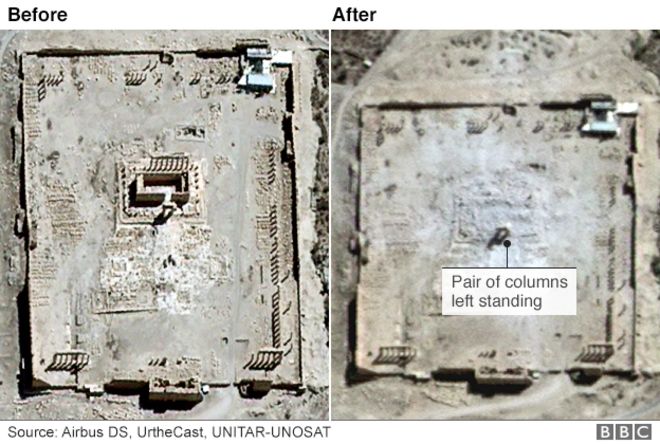
The Temple of Bel at Palmyra – In Memoriam

Bad news travels fast and the criminal destruction of the Temple of Bel (or Baal) at Palmyra made headlines very quickly. I never wrote about my experience to this great archaeological site (2009) because there is no record of Alexander visiting the city while in Syria, but at this stage, I feel that the least I can do is honor and pay my respects to Palmyra and more specifically to this unique temple. More background information about the city and its rich history will be treated separately.

For most people, a temple is just a colonnaded building resting on the stepped crepidoma and in some cases there are also remains of the interior walls that belong to the naos where a statue of the pertaining god is on display. Yet finding a temple with its original enclosure is very rare. The most striking examples I encountered were at Jerash (Gerasa) in Jordan with the Temple of Artemis and here at Palmyra in Syria with the Temple of Bel.

This temple complex is located in the southeastern corner of this magnificent city at the end of the stately Decumanus. In spite of the very promising reduced model exhibited at the local museum, I was overwhelmed by the sheer size of the Temple of Bel bounded by its high perimeter wall. For once the entire sacred precinct, the temenos, has been preserved with the open-air altars where the sacrifices were made and the dependence buildings used by the priests. Usually the site of a temple demands a lot of imagination but here at Palmyra, the entire temenos lies at my feet – a true gem.

The once imposing entrance gate through the outer wall is now rather common. All along the inside of this outer wall runs a Stoa of which a good number of slender Corinthian columns are still standing in spite of the fact that the Ottomans removed most of the bronze pegs that held the drums together. Bronze was an expensive commodity that was reused and melted for other purposes, general for war equipment.

Rather unique are the remains of the path used to lead the sacrificial animals through underground vaulted tunnels to the temple altars. Large square slabs that covered this passageway have fancy holes to allow light and air to circulate. This ingenious system dates from the first century AD. The blood of these sacrificial animals was collected and mingled with water to irrigate and fertilize the neighbouring fields. How ecological can one be? Even the meat was not wasted as it was cooked and eaten.

The Temple of Bel was built in the year 32 AD, but the surrounding portico with its 18-meters-high columns was added at a later date. Originally they were covered with gold and silver plates – hard to imagine today, more so since on the entrance side only stubs of columns remain. A better-preserved colonnade can, however, be seen in the back of the temple. An ascending paved ramp leads to the tall gatepost decorated with grapevine motives.

From there one accesses the most sacred part of the temple, the naos or adyton. Following Semitic traditions, there are two adytons, one on each side. Although the roof of the left wing is much blackened one still can see the seven gods and seven planets surrounded by the twelve signs of the zodiac. The niche was occupied by the statue of the main god. A smaller statue apparently stood in the opposite southern shrine and would be carried around during the processions on heydays. Amazingly, the ceiling here is cut from one single monolith stone. The attentive visitor will also recognize the faded colours of a fresco on the wall facing the entrance in between the two altars which was added later on by the Byzantines who converted this temple into a church. As far as we know, the building was still in use during the 12th century as a mosque.

I truly marvel at this Temple of Bel, so big, so well-preserved and so special with its two adytons as a proof how Roman and Semitic religions lived in harmony at a time when Palmyra became the Roman Province of Syria under Emperor Tiberius.

Back outside, I try to figure out the temple-like buildings of the temenos with their slender Ionic columns and half-columns, the loose remains of ornaments richly decorated with grapevine. Among the bigger blocks, I find a relief showing the holy procession to the temple, but also reliefs of camels, and Palmyran men in their typical pants as well as elegantly veiled women. In another relief, I recognize Roman soldiers, yet dressed with an eastern twist clearly a statement of their wealth.

The opulence that reigned in Palmyra in those days does not pass unnoticed. I further try to visualize the layout of the entire sanctuary but in spite of the many remains it seems to be an impossible task; the gold and silver lining of the columns alone is a feature that we cannot imagine.


And now, in 2015, all this has simply vanished as shown on the satellite images that travelled around the world. Acts of barbarism are known from antiquity but don’t fit in the “civilized” world of our 21st century. What pride can a human being find in destroying, ransacking and demolishing its own culture, I don’t understand. I feel terribly blessed that I have been able to see Palmyra and so many archaeological sites of Syria with my own eyes.